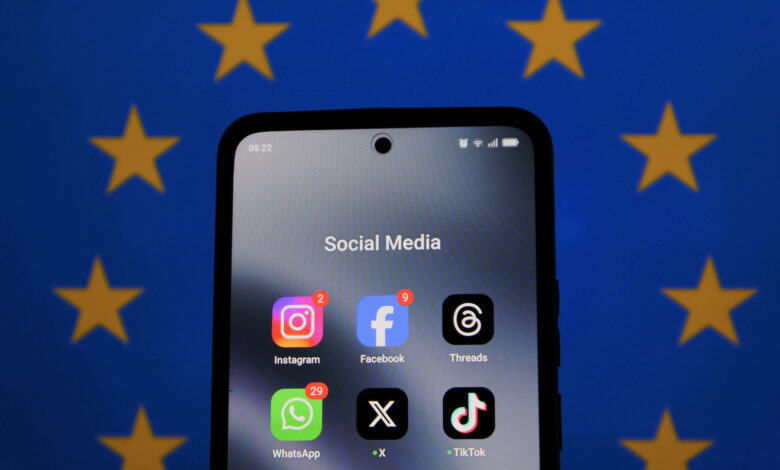
In light of a troubling report highlighting critical issues, Europe is moving towards potentially prohibiting social media use among children. EU Commission President Ursula von der Leyen conveyed this message at a recent press conference, stating, “It’s evident that we require age-appropriate limitations on platforms. The question is not whether children can access social media, but rather how and when social media can engage with our children.”
The report, authored by child psychologist Dr. Jörg M. Fegert and epidemiologist Dr. Maria Melchior, unveiled alarming data. Children across Europe are spending between four to six hours a day on social media, with nearly 60% reporting issues related to “socio-emotional development and vulnerability to mental health challenges,” which in turn leads to various problems like sleep disturbances, concentration difficulties, and heightened levels of depression and anxiety.
Consequently, the study advises the EU to restrict social media access for children below the age of 13 unless a parent or teacher is supervising. Furthermore, it suggests that teenagers aged 13 to 18 should only access platforms equipped with safety measures, such as restrictions on infinite scrolling. For toddlers under three years old, the study recommends that they should have no access to screens whatsoever.
Australia was the pioneer in prohibiting social media for children under 16, and other countries like France, Germany, and Spain are also considering similar actions. Additionally, Florida has enacted a regulation requiring parental consent for social media use by children under 14, effective from 2024.
Critics of Australia’s ban argue that children can easily circumvent it by misrepresenting their age or creating fake accounts. In response, the Australian government recently announced an increase in the maximum penalty for social media companies failing to enforce age restrictions, raising it to 99 million AUD, or approximately 68 million USD.
If Europe follows through with such legislation, it would mark the most substantial initiative yet to restrict social media access for children. The EU, with a population of around 450 million, includes approximately 81 million individuals under 18. However, enacting this kind of legislation would involve extensive negotiations among the 27 member states, a process that could be time-consuming.
This report might signal a significant turning point. “As we gather more evidence and observe the impact on our youth, the case for establishing a social media starting age only strengthens,” von der Leyen mentioned. The EU Commission is set to review the findings and recommendations and is expected to present a proposal after the summer.