Venus Aerospace Secures $90 Million in Series B Funding to Develop Innovative Rocket Engine Technology

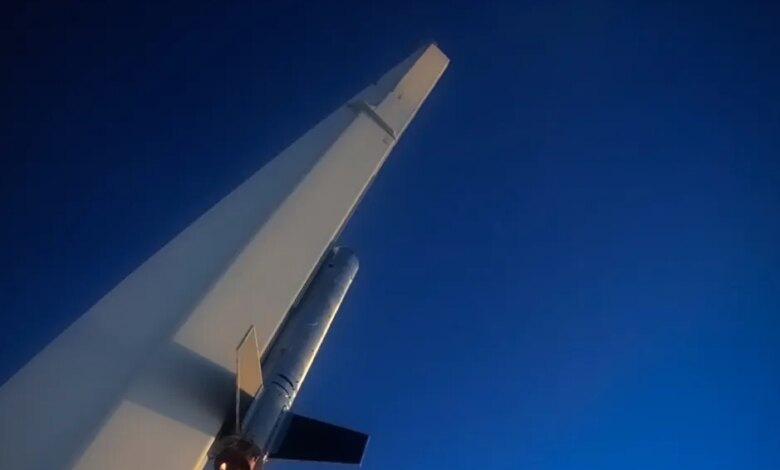
Innovate a new type of rocket engine, and the world may come knocking. This has certainly been the case for Venus Aerospace, which has introduced its Rotating Detonation Rocket Engine (RDRE), a highly efficient method for launching payloads into the atmosphere.
Founded in 2020 by the husband-and-wife team of CEO Sassie Duggleby and CTO Andrew Duggleby, Venus Aerospace originally aimed to create eco-friendly hypersonic passenger jets. However, after successfully showcasing their engine last year, the company’s direction shifted.
“When we conducted our first flight in May, the response was overwhelming. People began asking, ‘Do you have a working RDRE for sale?’ which caught us off guard,” Sassie Duggleby shared.
Now, their focus has turned to developing hypersonic weaponry, replacing traditional solid rocket motors in missiles with their advanced engine technology, along with high-speed aerospace vehicles designed for military use.
“Our propulsion design offers efficiency, adjustable thrust, reusability, and manufacturability, which are essential for defense and space operations,” Andrew Duggleby stated. “We’re dedicated to turning our technical advancements into reliable systems for active deployment.”
Venus has announced a $90 million Series B funding round aimed at supporting testing and development of specific vehicle designs to meet customer needs. The round was led by Mercury Fund and included investments from key players such as Lockheed Martin Ventures, MESH, PEAK6, Draper Associates, Starboard Star Venture Capital, and Green Sands Equity.
The concept of the RDRE has its origins dating back to the mid-1900s and is considered a theoretically more efficient rocket-launching method. Rather than burning fuel inside a conventional chamber, the RDRE creates a continuous supersonic combustion wave that circulates within a circular path. This approach has the potential to minimize fuel waste, though its intricate physics have posed challenges in mastering.
Recent developments in 3D printing and improved simulations have changed the landscape. The first successful test of the RDRE occurred in 2020 at the University of Central Florida. Following that, NASA executed ground tests of the engine in 2022, while Japan’s JAXA managed a brief in-space demonstration in 2021. Venus’s test in 2025 marked a significant milestone as it became the first RDRE to successfully propel a rocket in flight.
“When we started Venus, our narrative revolved around a new rocket engine promising higher heat output, increased thrust, and improved efficiency, coupled with our knowledge of preventing it from overheating,” Sassie Duggleby explained. “Much of our work over the past four years has concentrated on that challenge, and we’ve successfully addressed it.”
This year, the company received funding from the Texas Space Commission to construct a new, larger testing facility. This will be critical for the future of Venus, as their engine’s longest test duration so far is 32 seconds, while customer requirements may call for burn times ranging from 6 to 15 minutes.