I Delved into the 829-Page Mercedes G-Class Manual with Claude and Uncovered 3 Surprising Features

The Mercedes-Benz G-Class has been in production since 1979 and remains a prominent fixture in the automotive world, outdoing many of its early competitors. Initially developed for military purposes alongside the Austrian manufacturer Steyr-Daimler-Puch, the G-Wagen made a smooth transition to civilian use and continues to thrive. Today, it stands as a symbol of luxury and status, frequently spotted outside upscale restaurants in Beverly Hills and on rugged trails in the Colorado wilderness, often within the same weekend.
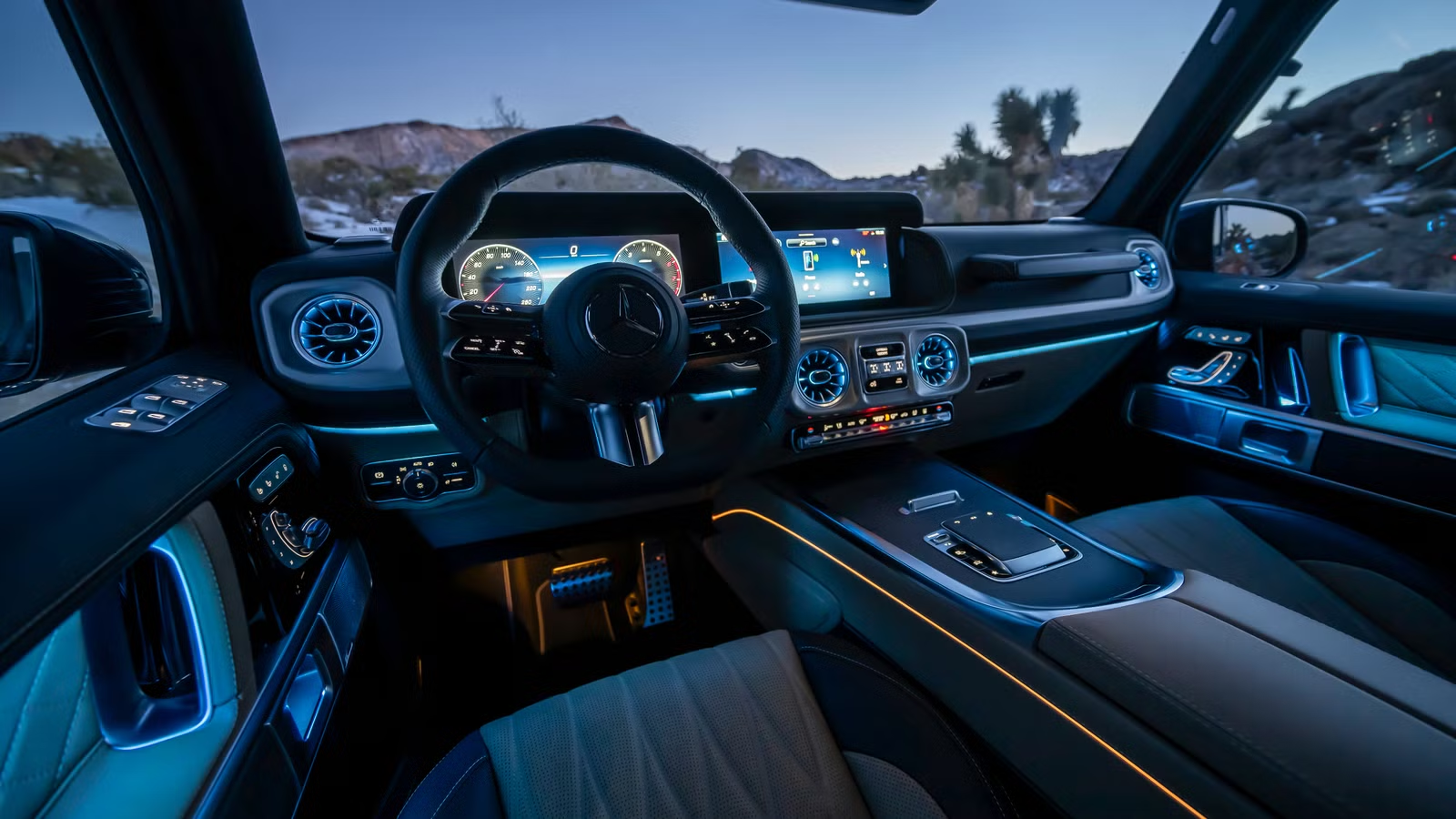
Within its luxurious interior, the G-Class boasts Nappa leather seats, two 12.3-inch displays that form the MBUX dual-screen system, and customizable ambient lighting. It also comes equipped with standard features including Apple CarPlay, Android Auto, navigation, and a surround-view camera system.
On the technical side, the G-Class is outfitted with three lockable differentials, an adaptive suspension system, and multiple driving modes designed to accommodate everything from leisurely highway driving to serious off-road adventures.
Three Powerful Engine Options
Dominate the Off-Road Landscape
The 2026 G 550 is driven by a 3.0-liter turbocharged inline-six engine paired with mild-hybrid technology, generating 443 horsepower and 413 lb-ft of torque. Power is sent to all wheels via a nine-speed automatic transmission and a two-speed transfer case.
The G-Class range also features the AMG G 63 model, which utilizes a 4.0-liter biturbo V8 engine that delivers 577 horsepower and 627 lb-ft of torque. Additionally, the fully electric G 580 is equipped with four electric motors producing a total of 579 horsepower and 859 lb-ft of torque.
The 2026 G 550 starts at $153,900. It’s interesting to note that the Toyota Land Cruiser offers similar off-road capabilities for a significantly lower price, although many would argue that the G-Class carries a unique charm that justifies its premium.
Innovative Features for Enhanced Control
Transparent Hood Technology
The G-Class’s towering design can create blind spots, particularly in rugged terrains. To address this, it features a Transparent Hood technology that employs a 360° camera to create a virtual image of the terrain directly in front of the vehicle. This feature displays on the central screen via the G-Class’s Offroad menu, automatically engaging when moving in Drive at low speeds.
The visual representation encompasses the area underneath the hood, the front wheel’s position, the current trajectory, and the vehicle’s elevation. As speed increases, the display automatically switches from a transparent view to a standard front camera image, eventually turning off when reaching certain speeds depending on the active driving program.
Manage Your Speed with DSR
Downhill Speed Regulation for Safer Descents
The DSR, or Downhill Speed Regulation, is an invaluable feature when navigating steep declines. It maintains a preset speed of two to 11 miles per hour, automatically applying brakes as necessary based on the slope’s steepness. You can set the desired speed and even adjust it with steering wheel buttons. The feature operates in Drive, Reverse, and Neutral, delivering versatility on challenging terrains.
Create Your Own Driving Program
Customize Suspension, Transmission, and Exhaust Settings
The G-Class provides a range of driving modes through its Dynamic Select system, including Comfort, Eco, Sport, and specialized off-road options. Among its features is an Individual mode, allowing drivers to customize their settings for transmission, suspension, and exhaust sound according to personal preferences. These adjustments can be saved for future use, adding further convenience.
Education Through Exploration
The operator’s manual for the G-Class is extensive, extending to 829 pages and housing many features that may go unnoticed by the average owner. Interested individuals can upload the manual to AI tools for exploration or to gather insights about the vehicle. Leveraging technology in this way allows for a quicker grasp of the features compared to traditional manual reading.