NASA’s Swift Boost Initiative Set to Launch This Month to Save a Failing Telescope

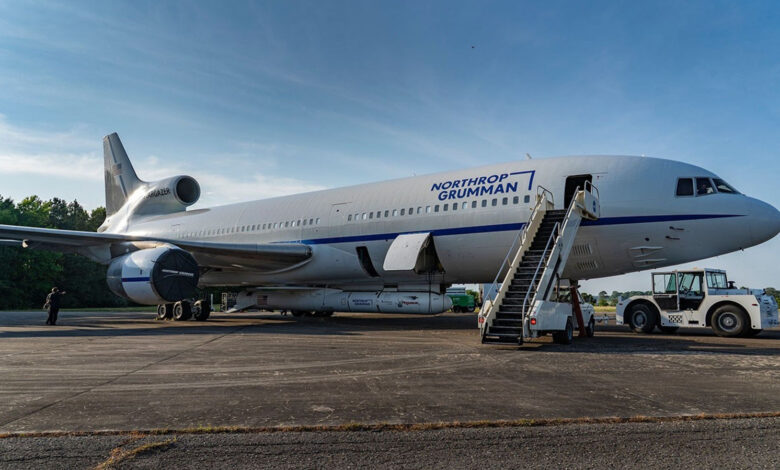
The Swift Boost mission is gearing up for its journey into space.
The upcoming NASA Swift Boost mission is set to launch this month with the goal of saving the Neil Gehrels Swift Observatory, which is facing an unexpectedly rapid decline in its orbit. This mission aims to extend the telescope’s operational lifespan in space for several additional years. The launch is scheduled for June 27, as reported by sources.
To facilitate this mission, NASA has partnered with Arizona-based Katalyst Space to develop LINK, a robotic spacecraft specifically designed to dock with the observatory and pull it into a higher orbit. Engineers at NASA’s Wallops Flight Facility in Virginia recently completed the installation of LINK on a Northrop Grumman Pegasus XL rocket. Following this, the rocket was attached to a plane named Stargazer, which departed Wallops on June 18 en route to Kwajalein Atoll in the South Pacific for its upcoming launch.
Once in the air, Stargazer will elevate the Pegasus XL to approximately 40,000 feet before releasing it. The rocket will experience a brief free fall before igniting its engines to launch LINK into space within about 10 minutes. While all satellites gradually lose altitude, the Swift telescope has been experiencing an accelerated decline, primarily due to increased atmospheric drag linked to heightened solar activity.
“Swift’s orbit is declining rapidly, so we find ourselves in a race against time; however, by utilizing existing commercial technologies, we are actively addressing this challenge,” stated Shawn Domagal-Goldman of NASA during the announcement of the partnership with Katalyst.
Launched in 2004 to investigate gamma-ray bursts, the Swift telescope has since evolved into a multi-wavelength observatory. NASA describes it as a “dispatcher,” providing crucial information about sudden cosmic events that enable follow-up by other observatories. For example, it played a critical role in identifying an X-ray source that eventually revealed a 13-billion-year-old supernova, as confirmed by subsequent data collected from other telescopes like the James Webb Space Telescope.