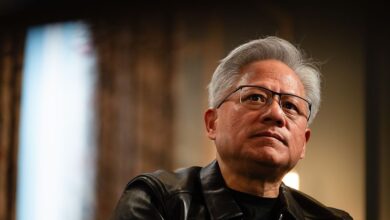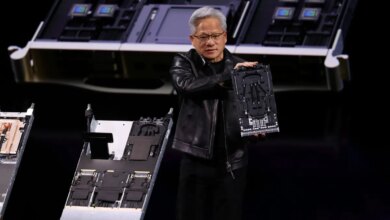
In August, Nvidia’s chief security officer, David Reber, stepped down, a move that went largely unnoticed. Just months later, CEO Jensen Huang departed amid mounting scrutiny regarding his personal relationships, particularly his connection with an executive from Megaspeed, a Singapore data center being investigated for potentially sending Nvidia technology to China, as well as two alleged affairs with Nvidia staff members.
Reber, who had served as CSO for four years and worked at Nvidia for a total of seven, announced his resignation for health-related reasons. He revealed on LinkedIn in late August that he had been diagnosed with young-onset Parkinson’s over two years prior, stating, “This wasn’t a pivot I had planned. But I know what needs to come first: family and health.”
Saša Zdjelar, Reber’s successor, brings a wealth of experience from 17 years at ExxonMobil in Houston, where he held various IT management roles, as well as a year at Salesforce and experience at ReversingLabs, a cybersecurity firm. Zdjelar did not provide comments on his new role or the security team’s awareness of any issues.
There is no public link between the changes in leadership at Nvidia and the Megaspeed investigation. However, questions arise about whether Nvidia’s security division was aware of the government’s scrutiny and Huang’s personal affairs, and if any concerns were voiced. Reber was unavailable for comment, and Nvidia has not responded to inquiries.
While personal relationships typically fall under HR’s and legal’s purview, an affair involving someone from a company under federal investigation is a significant concern. Experts in security warn that such relationships may expose vulnerabilities that foreign intelligence can exploit. Identifying these risks can be challenging due to the nature of intelligence gathering, which often relies on casual conversation rather than traditional hacking methods, according to retired intelligence officer Nicholas Eftimiades, who has trained numerous corporate security personnel.
It appears some individuals within Nvidia were aware of certain aspects of the situation. Reports indicate that Nvidia’s chief legal officer was involved in the Megaspeed inquiry over a year ago, and various employees have indicated they were aware of Huang’s relationships, suggesting that the behavior might not have been entirely clandestine. However, it remains uncertain whether this information reached the security team.
If such information had been relayed, Eftimiades points out that security teams are often team-strapped for resources. They are frequently underfunded because their operations don’t directly generate revenue. This can lead to CEOs dismissing security teams’ alarms with minimal attention to compliance mandates.
Many corporations still maintain a narrow definition of security, focusing primarily on physical protection and preventing cyber threats. In a recent opinion piece, security experts argued that organizations need to expand their focus to include insider threats, suspicious business ties, and potential conflicts of interest.
Certain situations, however, may be beyond any team’s capacity to manage. For instance, Eftimiades illustrated a scenario where a CEO struggles against board members opposed to particular actions, revealing key insider dynamics to intelligence services on the lookout for vulnerabilities.
Foreign intelligence agencies often prioritize gaining insight into business policies over technological data, seeking key players who can influence regulatory changes. Eftimiades observed that the current climate of intelligence-gathering aims to establish long-term connections, in contrast to the shorter durations seen in historical spying cases.
Technological tools can supplement human intelligence efforts. Eftimiades pointed out that IMSI catchers, portable devices that can mimic cell towers to intercept mobile communications, are one method of data collection, albeit often costing significantly more than simple setups.
It remains unknown whether Huang’s communications were compromised utilizing such techniques. Nonetheless, as investigations unfold, clarity about Nvidia’s security operations and any potential oversight should emerge.
Eftimiades expressed hope that the situation serves as a crucial reminder for U.S. companies, which he claims remain largely unaware of China’s espionage strategies. He estimated that the country has lost trillions in intellectual property, asserting that existing measures are insufficient.