Jensen Huang’s Exit Creates Major Rift in AI Startup Funding, According to Founders and VCs

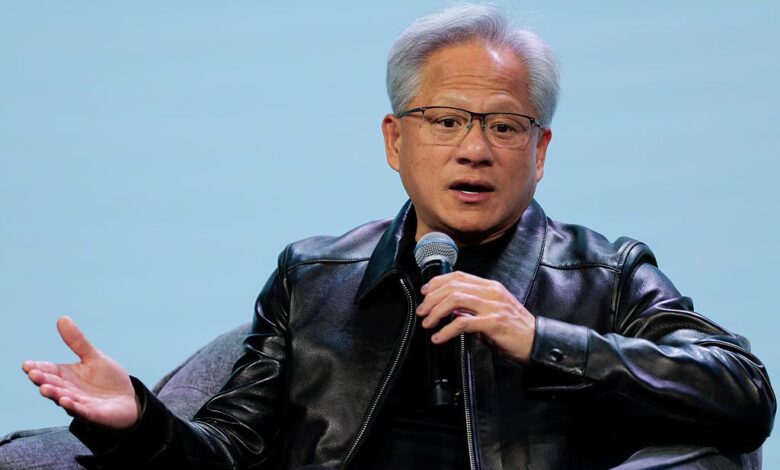
The global tech community reacted intensely as Jensen Huang, the CEO of Nvidia and its co-founder for 33 years, announced his resignation. “It feels like an explosion went off,” remarked a startup leader when they heard the news.
In recent years, Nvidia has aggressively invested in startups, committing tens of billions annually and taking part in 105 funding rounds this year, frequently as the lead investor, according to PitchBook. Maria Davidson, founder of Relational Capital, warned, “A change in this strategy would significantly impact many emerging companies.”
Huang’s departure leaves a significant void in the startup ecosystem, particularly in terms of available capital, which could drastically influence funding, deal activity, valuations, and market competition, investors noted.
“Nvidia is a crucial supporter of nearly every AI-focused startup, spanning applications to neoclouds,” observed Shamilla Bankiya from Dawn Capital.
Major investment decisions were typically attributed to Huang himself, according to Umesh Padval, a managing partner at Seligman Ventures. Padval has been acquainted with Huang since serving on the board of Mellanox Technologies, which Nvidia acquired for about $7 billion in 2020. While there is hope for continuity in investment under Huang’s successor, many investors are skeptical about immediate results.
Colette Kress, Nvidia’s interim CEO, is likely to implement various changes, especially regarding investments in AI startups at a critical juncture for the billion-dollar data center expansion. Huang’s aggressive funding approach in this domain has raised concerns on Wall Street.
“Kress adopts a much more cautious approach,” one investor remarked. “It’s unlikely she will allocate similar funds to sustain the early-stage ecosystem.”
Nvidia’s principal investments have been in neoclouds, inference providers, and open weight models, which are often prohibitively expensive for smaller startups. “Huang’s initiatives significantly contributed to the emergence of an ecosystem,” stated Zain Javid, co-founder of the hardware company Ghost.
For instance, Nvidia invested in CoreWeave when it was still a private entity and was involved in two funding rounds for Crusoe, including its $1.4 billion Series E. Additionally, the company acquired Hugging Face this year for $13 billion (scheduled to close in 2027) and holds stakes in Mistral AI, Lambda, and Black Forest Labs. Nvidia frequently led the funding in these deals. Last year, it injected $800 million into a $2 billion Series B funding round for Reflection AI, prior to the startup generating substantial revenue, according to reports.
“Jensen championed open source and, frankly, European initiatives,” Bankiya mentioned regarding Huang’s global commitment to AI investments. A halt in funding to areas outside the U.S., such as Europe, would create a substantial gap that no other entity could fill.
Nvidia’s substantial presence in this space sometimes felt monopolistic. By making considerable investments in various companies, Nvidia effectively encouraged them to rely on its chips, which bolstered its dominant market position.
Should Nvidia become more prudent in its investment practices, this could open up opportunities for competitors and smaller players. Notably, Google recently unveiled two new chips, coinciding with Huang’s resignation from Nvidia.
Some investors are optimistic that major cloud providers and other chip manufacturers might step in to support startups, lessening some of the gap created by Huang’s departure.
Dharmesh Thakker, a general partner at Battery Ventures, anticipates that larger tech companies will compete for Nvidia’s former investment position, “based on who can offer the best product and community to rival CUDA, coupled with the financial strength to support the ecosystem,” he stated. CUDA is the software platform that enables developers to run AI models on Nvidia’s GPUs.
While companies like Google, Amazon, Microsoft, and AMD may invest in established startups to promote their chips, Thakker doubts they will replicate Nvidia’s extensive pre-revenue investments in infrastructure startups.
Previously, under Huang’s leadership, infrastructure companies requiring $100 million to $500 million in GPUs often raised a portion of that funding at valuations exceeding $1 billion with Nvidia’s backing, providing reassurance to other investors in supporting these high valuations.
With the anticipated tightening of investment strategies, Nvidia is likely to apply more scrutiny to new ventures while writing smaller checks for existing ones, leading to a decline in valuations.
Nonetheless, many believe that Nvidia’s potential slowdown in investments will not derail the broader AI movement.
While the technology industry acknowledges Huang’s significant impact, former employee Amulya Vishwanath, who now runs her own venture capital firm, remarked that “leaders must take responsibility, and the ecosystem is larger than any single individual. That talent will continue to flourish.”