In the past, I believed that performing an annual backup of my photos on an external drive was sufficient for data security. However, I’ve since realized that transferring my digital files can be more complex than it appears. I’ve adjusted my methods to ensure that my data remains accessible and doesn’t vanish once I’m no longer around, moving beyond simple reliance on an SSD.
Traditional Discs Deteriorate Quickly
Use Durable Media for Long-Term Storage
To effectively safeguard your digital files over time, it’s important to understand what storage options to avoid. Standard recordable media such as DVDs, Blu-rays, or flash drives may seem sturdy, but their longevity is compromised.
These discs utilize a layer of organic dye to record data by altering its chemical structure through a laser. This process, while effective in the short term, leads to instability as these dyes naturally degrade, especially when exposed to sunlight, temperature fluctuations, or humidity, eventually resulting in data loss.
For lasting archives, consider switching to M-DISC media. Unlike organic dyes, M-DISCs employ an inorganic layer that is physically engraved by a laser, ensuring that data remains intact. This process results in deeply etched features that are less vulnerable to environmental factors like oxygen and moisture.
Proprietary Formats May Lock You Out
Opt for Open-Source Formats like Text and PNG
Storage hardware alone won’t guarantee data accessibility. The choice of file formats is equally critical. Relying on proprietary formats such as older Microsoft Word or Adobe Photoshop files poses a risk since they are dependent on specific software that may not remain available indefinitely.
If the companies that create these formats change their policies or cease operations, the files could become inaccessible with no means of recovery. To prevent this, convert your photos to widely used formats like .jpg or .png and your documents to .txt, .html, or PDF/A. By doing so, you’re less likely to be tied to any singular software.
While .jpg images do undergo lossy compression, their ubiquity ensures they will remain supported for the foreseeable future. Likewise, .png files are lossless and readily accessible. For documents, .txt files in ASCII or UTF-8 format are the most universal, while PDF/A preserves formatting by embedding necessary fonts and other components directly into the file.
Implement the 3-2-1-1 Backup Strategy
Don’t Rely Solely on One Storage Solution
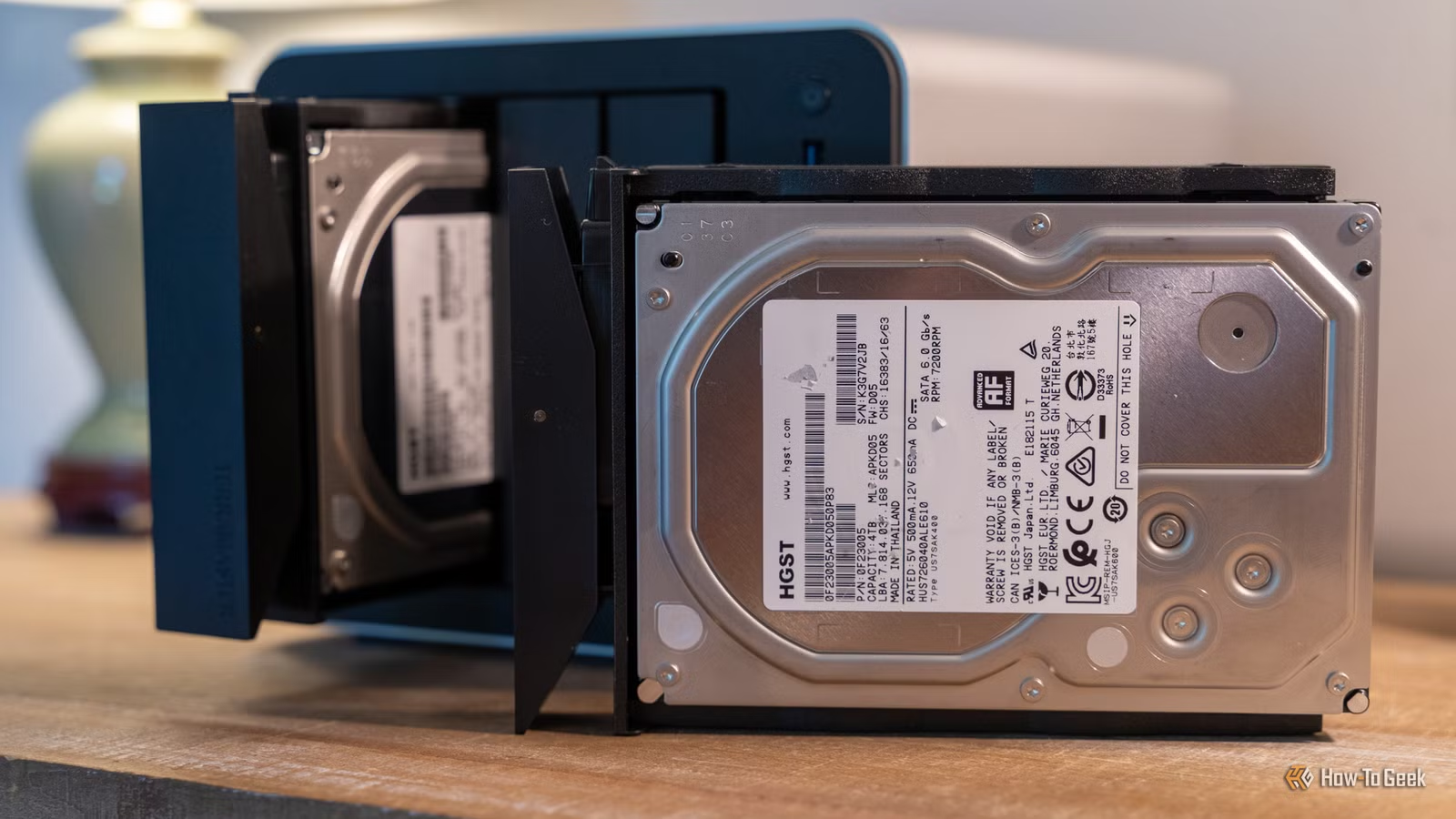
For the long-term preservation of your digital assets, simply backing up to one device is insufficient. Adopt the 3-2-1-1 backup strategy: maintain three copies of your data, with one on your primary computer and at least two additional backups in different formats.
Utilizing different storage technologies, like an SSD alongside an M-DISC, helps to mitigate risks, as various types of hardware can fail differently. Additionally, one backup should be stored in a separate location to protect against disasters like fire or flooding that could affect all copies simultaneously.
Prepare for the Inevitable
Arranging for Data Access Upon Your Passing
If you want your data to be accessible after your lifetime, proactive measures are essential. Simply having a will or a death certificate may not suffice, as many companies have stringent rules concerning access to digital accounts.
To prevent your family from losing access to your files, utilize the legacy features offered by various tech companies, which allow you to designate someone to manage your accounts posthumously. For instance, Google’s Inactive Account Manager enables you to choose trusted individuals who will gain access if your account becomes inactive for a set period.
Similarly, Apple provides a Legacy Contact option that facilitates access to your iCloud data with the appropriate documentation. Meta also offers a Legacy Contact feature for Facebook, allowing appointed individuals to memorialize your account or download your shared content upon your passing.
In addition, consider naming a digital executor in your will dedicated to managing your online assets. A typical will might not provide sufficient authority for your executor to handle your digital files effectively.
Steps to Take Before It’s Too Late
While no solution guarantees perfect digital permanence, taking these steps can offer some peace of mind. By adopting a multi-faceted approach that incorporates various formats, storage methods, and legal preparations, you can reduce the risk of losing your data to a single failure point.