Ryan Haines / Source
Looking at my Galaxy Watch 4, I feel little urge to upgrade to a newer Samsung model despite the buzz around the upcoming Galaxy Watch 9 and Galaxy Watch Ultra 2. The latest Health app expansion promises a range of new features.
New fitness indices, health metrics, and auditory health features all sound promising. However, after many years, Samsung has yet to replicate a specific Garmin function that neatly quantifies my day’s activity: the Body Battery.
What’s your take on Garmin’s Body Battery feature?
220 votes
Understanding Garmin’s Body Battery Score

Kaitlyn Cimino / Source
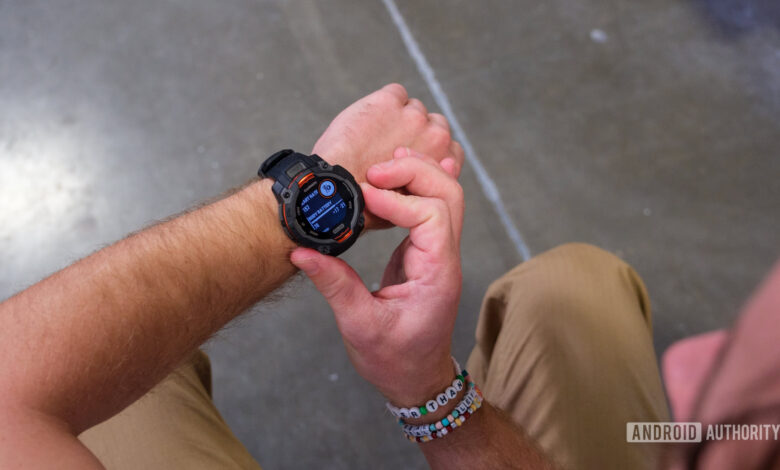
Nearly a decade has passed since Garmin launched its Body Battery feature, and it has been quite some time since I last used a Garmin device. Distance often increases appreciation.
In simple terms, the Body Battery score reflects a user’s energy level throughout the day, ranging from 0 (least) to 100 (most). The score is derived from various physiological factors like heart rate, sleep quality, and heart rate variability (HRV), a strong indicator of overall bodily stress.
Consider Body Battery as a measure of your energy status.
While this might sound akin to other holistic scores, Body Battery stands out. Users can “recharge” their score by resting or napping, while physical activity deducts points. The more physically demanding activities I engage in, the lower my score drops. Conversely, a quick nap can elevate my score. This dynamic differentiates it from static metrics offered by competitors.
Body Battery can essentially be viewed as the body’s “charge status,” a framework that is easily understandable for both new and experienced users without overwhelming jargon.
I appreciate Body Battery’s variability. We are dynamic beings, and we never start a new day at zero. The Body Battery score carries over from the previous day, adding significance to each action taken throughout the day.
Is there a Samsung equivalent to Body Battery?
Kaitlyn Cimino / Source
While Samsung offers an Energy Score that could be seen as similar, there are distinct differences between the two.
For instance, Energy Score updates just once a day and heavily relies on sleep data; oversleeping or missing certain sleep stages can result in a low score. The activity factor is included but plays a minor role. Unlike Body Battery, which is dynamic, Energy Score is static and only provides an update once daily.
The Energy Score updates only once a day, lacking the fluidity of Body Battery.
Additionally, there’s a delay in assessing the impact of daily activities on Energy Score. In contrast, Body Battery quickly indicates how a workout influenced my energy. It allows me to make immediate decisions about whether to continue or take a break.
Body Battery is notably useful for managing my energy levels, not just during physical exercise.
If I wake up feeling off and notice a lower battery compared to yesterday’s, I adjust my workload accordingly. This lets me distribute my energy throughout the day effectively. If the battery drops too low, a brief rest can recharge it. Conversely, if I’m feeling energetic and nearing a score of 100, I know I can push myself harder without a future energy penalty. Just like tracking time, Body Battery helps me manage my energy.
Body Battery is an excellent tool for budgeting my daily energy.
Quantifying something as vague as energy levels is an inexact science. Various factors can skew the results, possibly leading to inaccuracies. Watches may miss steps or miscalculate sleep stages, affecting scores and future readings. Ultimately, manufacturers provide estimates based on collected data, and in my experience, Garmin’s approach tends to reflect my actual feelings more accurately.
With Galaxy Watch 9 on the horizon, I’m exploring other options
Jimmy Westenberg / Source
Left to right: Garmin Venu 2 Plus, Samsung Galaxy Watch 4
As we approach the launch of the Galaxy Watch 9 series, I find myself considering my upgrade options.
I could stick with Samsung, enjoying their specific health metrics that delve into various aspects of wellness. I’m a fan of detailed metrics, so the Fitness Index is one feature I’m particularly attracted to, among many others likely to be available soon.
What features would encourage you to upgrade to the Galaxy Watch Ultra 2?
1431 votes
However, I have reservations about accumulating excessive metrics, as more scores don’t necessarily translate into more valuable information. Dividing my wellbeing into numerous figures can complicate the understanding of my health. Ideally, the Energy Score should encapsulate my feelings accurately, but it falls short compared to Body Battery.
Though not without flaws, Body Battery remains the most reliable energy estimation tool I’ve encountered. It is easy to understand, adapts to daily actions, and provides a flexible baseline. Some users may prefer static scores, but our bodies are in constant flux, reflecting the reality of our lives.
Thank you for being part of our community. Please review our comment policy before contributing.