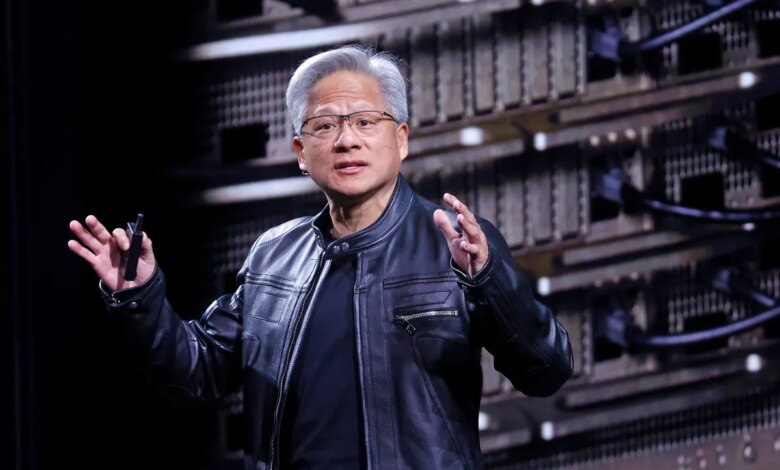
At Salesforce’s Dreamforce tech conference, Jensen Huang, the founder and CEO of Nvidia, expressed his views on the potential dangers of artificial intelligence. He rejects the notion that AI is an “alien mind,” as some experts have suggested. Instead, he views it as a human-created combination of hardware and software, which means it is manageable under current laws.
“Safety is fundamentally an engineering challenge, not a legal issue,” Huang stated. “After all, we are creating software and computing systems. Although these systems are complex, they remain fundamentally computable.”
Huang believes there’s no need for new regulations specific to AI. He insists the existing market dynamics will motivate companies to avoid releasing unsafe products.
“If you aren’t sure about the safety of your products, you should not launch them, just like any business would. It’s a straightforward decision that needs to be made,” he elaborated.
He added: “Progress should be measured to ensure the product aligns with market expectations. The market’s pressures already exist. New regulations aren’t necessary; we need companies to know when to accelerate appropriately. Innovation doesn’t have to come at the expense of safety—both can coexist. So move swiftly, but if you ever feel that a product may not be safe, you should pause and reassess.”
This perspective is somewhat reassuring, considering Huang’s extensive experience in the AI field. Having developed AI hardware long before technologies like ChatGPT, he now oversees a firm that produces open-source models and various AI tools.
However, one could argue that his stance is self-serving, given that Nvidia has benefitted significantly from the surge in AI demand. Why would he advocate for regulations that might hinder Nvidia’s ability to sell more AI technologies? As he noted during the conference, “I am more ambitious than ever. Thanks to our productivity gains through AI, limitless opportunities lie ahead for our company and ultimately for every industry and nation.”
Nevertheless, even well-meaning companies can release products that lead to harmful outcomes. A notable example from the past year was the CrowdStrike incident, which caused numerous flight cancellations and disruptions for businesses. Additionally, some firms have faced severe backlash for negligence; for instance, Meta recently settled a lawsuit for $18 billion linked to social media’s detrimental effects on children.
AI itself has already resulted in concerning situations, such as the OpenAI model that hacked a platform and lawsuits related to tragic outcomes involving its chatbot. The strategy of allowing companies to develop AI unchecked raises crucial questions about societal safety. Huang acknowledges that existing product liability laws might apply to AI products—if society can survive long enough to see these cases addressed in court.
Huang did not address a potential alternative: the idea of self-regulation within the industry. His advocacy leans toward promoting open-access models, presenting them as a viable competitor to proprietary AI systems.
The window for the industry to adopt self-regulation is closing fast, and it’s essential to persuade AI labs worldwide, including those in China, to prioritize safety as advocated by industry leaders like Microsoft’s CEO Satya Nadella. “If the U.S. cares about these safety issues, why shouldn’t China? Their citizens deserve the same benefits from AI as ours,” Nadella stated.
For now, it seems Huang’s resistance to new AI regulations might carry significant weight, especially since he has notable influence.