iPhone 18 Pro vs. Pixel 11 Pro: A Showdown of Apple and Google’s Premier Smartphones

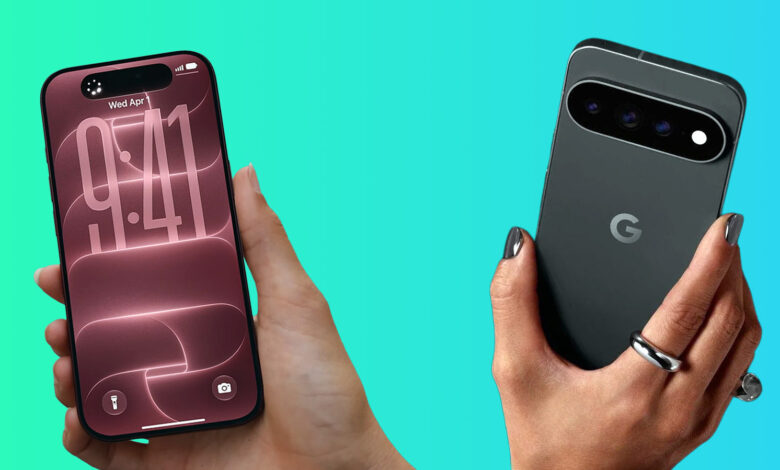
Enhanced AI features, superior camera quality, and limited incentives for ecosystem changes.
The iPhone 18 Pro and Pixel 11 Pro exemplify the continue evolution of flagship smartphones, with both companies focusing on refinement rather than overhaul. These devices stand out for their impressive capabilities, featuring exceptional displays, three rear cameras, and a burgeoning array of AI functionalities. They are available in two sizes at comparable prices.
While there are distinct differences between the two, neither device provides a strong motive to switch platforms. If you’re content with the integration of your iPhone with other Apple devices such as Macs, iPads, Apple Watches, and AirPods, there’s little reason to transition to Android. The same logic applies for users firmly entrenched in the Google ecosystem.
While the ecosystem decision is clear, the finer details warrant a closer look. Let’s compare their features more closely.
Design and Dimensions

In terms of design, both phones largely adhere to their established styles. The Pixel retains its iconic camera bar but features edge-to-edge glass for a sleeker appearance. Available colors include Canyon, Fog, Olive, and Obsidian, with an aluminum frame complementing each.
A practical upgrade for the Pixel is the new camera bar, which stabilizes the phone when placed on a flat surface, avoiding wobbles—a subtle feature that enhances usability.
The iPhone 18 Pro maintains its signature aluminum unibody and incorporates a durable Ceramic Shield back. Color options include black, silver, and two new shades: Glacier (icy blue) and Burgundy.
The weight of the smaller versions is fairly similar, with the Pixel 11 Pro at 7.2 ounces, slightly lighter than the iPhone 18 Pro at 7.44 ounces. The disparity grows with the larger models, as the Pixel 11 Pro XL weighs 8 ounces, making it nearly nine percent lighter than the 8.78-ounce iPhone 18 Pro Max.
Dimensionally, the differences are subtle; the standard Pixel is slightly taller and narrower compared to the iPhone, while the Pixel 11 Pro XL is marginally shorter and narrower than the iPhone 18 Pro Max. Both Pixel models are listed as 0.04 inches thinner than their iPhone counterparts, which may be due to rounding.
Displays

Both devices are equipped with OLED displays featuring adaptive refresh rates up to 120Hz, making this a less pivotal factor in choosing between them. The screens measure 6.3 inches on both the Pixel 11 Pro and iPhone 18 Pro, while the larger models differ slightly with the Pixel 11 Pro XL at 6.8 inches and the iPhone 18 Pro Max at 6.9 inches, representing a minor increase in screen area.
Google claims a peak brightness of 3,600 nits, compared to the iPhone’s outdoor peak of 3,000 nits, although differing measurement methods complicate direct comparison. Still, brightness levels on both devices are sufficient to avoid influence over purchasing decisions.
This year, Google introduced an enhanced anti-scratch coating, reportedly doubling resistance, while Apple continues with last year’s Ceramic Shield 2, complementing it with an anti-reflective coating absent on the Pixel.
Apple also refined its Dynamic Island, now displaying up to three Live Activities, whereas the Pixel’s smaller camera cutout still needs to accommodate Face ID technology, taking up more space than a typical lens. The iPhone’s display can dim to as low as 1 nit.
Resolution-wise, both models are comparable, although the Pixel boasts a slightly higher pixel density: 495 ppi for the Pixel 11 Pro and 486 ppi for its larger counterpart, against 460 ppi for the iPhone 18 Pro and Pro Max. Both options offer sharp images sufficient for most users.
Cameras

Both Apple and Google maintain consistent camera systems across their device variants, allowing users to choose sizes without sacrificing camera quality. The Pixel 11 Pro and Pro XL boast a setup with a 50MP main camera, 48MP ultra-wide, and a 5x telephoto lens, while the iPhone 18 Pro and Pro Max feature three 48MP cameras, including a versatile 4x telephoto capable of producing 8x “optical-quality” images.
Google relies heavily on AI to enhance photography, automatically determining optimal settings for various lighting conditions. Its Instant Night Sight feature drastically speeds up low-light photography, while the telephoto lens supports a unique 5x Portrait Mode. Pro Zoom extends digital zoom capabilities up to 120x, though results can sometimes appear overly polished.
Conversely, Apple focuses on user autonomy, introducing a versatile aperture main camera this year—users can see the aperture blades adjust themselves. This feature allows for improved low-light photography and control over depth of field. There’s also added manual control over shutter speed and white balance, alongside a histogram display.
This signifies a notable shift, as Android has traditionally appealed to users seeking customization. Now, Google emphasizes automated adjustments, while Apple hands over more control to users. The dynamic is shifting.
Apple’s new Reference Image feature aims to combat advanced image manipulation by capturing signed sensor data, creating an unalterable reference image that can be compared against edits.
In video capabilities, the iPhone holds a clear advantage, offering features like 4K Dolby Vision at up to 120 fps, ProRes RAW, and advanced recording options aimed at professional videographers. The Pixel 11 Pro can capture 8K video but falls short of Apple’s extensive features.
AI: Gemini and Enhanced Siri

Google’s focus on AI has been notable over the past few generations, making the Pixel 11 Pro quite advanced in this realm. It operates on-device using Gemini Nano and includes features like Rambler, which enhances dictated text, and Magic Capture, which optimally selects photos from short scenes. Circle to Search has also been integrated into the camera function.
Overall, the Pixel takes a more proactive approach to suggest AI features, though some may feel like unnecessary additions.
In contrast, Apple is more selective, prioritizing the utility of Siri. The assistant gathers personal data from various sources to provide contextual responses and actions. New capabilities in the Camera app allow Siri to recognize visual elements around you.
Apple has collaborated with Google on some AI models, so some aspects of Gemini may be present in both devices. However, Siri operates independently from the Gemini models in Pixel devices.
In its upcoming iOS 27, Apple will introduce generative photo features, enhancements for Safari monitoring, and improved visual search via the camera. It’s worth noting that certain Siri AI functionalities are still in beta and are not initially available in the EU, with some server features having daily limits on usage.
Performance and Battery Life
Both smartphones incorporate new chipsets with distinct capabilities. Google touts the Tensor G6 for faster performance in applications, web browsing, and AI functionalities. Apple’s A20 Pro chip is promoted for its outstanding sustained performance due to an improved vapor chamber, beneficial for intensive tasks like gaming and video editing. In day-to-day usage, both devices are expected to be fast and efficient.
Comparing battery performance can be challenging due to differing testing methods, with the new iPhones not yet subject to real-world evaluation. Google claims over 30 hours for both Pixel 11 Pro models, while Apple cites 24 hours for the iPhone 18 Pro and 30 hours for the Pro Max. Those needing longer battery life should consider the larger versions.
Apple’s rapid charging capabilities are impressive, claiming 50 percent charge in approximately 15 minutes, while the Pixel 11 Pro XL can achieve 75 percent in about 30 minutes—though appropriate power adapters are necessary for these speeds.
Which One Should You Buy?
Pricing for both is closely matched, with Google offering an edge with smaller models. The Pixel 11 Pro starts at $1,099, while the iPhone 18 Pro begins at $1,199. The larger models share an entry-level price of $1,299, with all variants starting at 256GB of storage. Apple provides configurations up to 2TB, whereas the Pixel caps out at 1TB.
Ultimately, for most users, the resolution is straightforward: if you’re already in the Apple ecosystem, the iPhone 18 Pro is the clear choice; similarly, if you’re invested in Google’s services, the Pixel 11 Pro is the logical option.
In addition, the Pixel offers some practical benefits, being slightly lighter—especially in the XL variant—and its AI features fit seamlessly into everyday tasks. Conversely, the iPhone emphasizes professional camera capabilities and video features, along with consistent performance and a more cautious AI approach.
No definitive winner emerges between the two; both are remarkable flagship smartphones for 2026, catered to different audiences, with neither presenting a strong reason to switch platforms. The essential query revolves around which device aligns better with your particular needs and style.


