Go Pursues Robotaxis and Acquisitions Following Japan’s Largest IPO of 2026: The Significance Explained

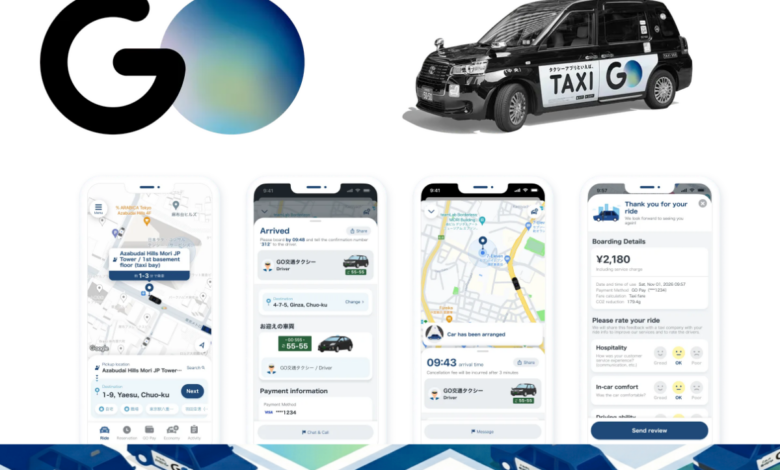
Go’s recent initial public offering (IPO) stands out as Japan’s largest this year, revitalizing the country’s slow listing environment while supplying essential funds to tackle a critical issue: the shortage of taxi drivers in Japan.
Publicly listed on Tuesday, Go aims to utilize the ¥88.6 billion ($553 million) raised from its IPO to further its robotaxi initiatives and pursue acquisitions, as stated by a company representative.
“The proceeds from the sale of newly issued shares will be invested in research and development for robotaxis and in expanding our business, including strategic mergers and acquisitions both within and beyond the taxi sector,” the representative explained.
Go’s market entrance occurred during one of Japan’s most subdued listing seasons, where the government has been encouraging startups to consider selling themselves instead of going public. The IPO attracted investments from major firms like BlackRock, Wellington Management, and M&G Investment Management, highlighting the areas where global institutional investors are currently focusing in Japan. However, the stock closed on Friday at ¥2,314, slightly below its IPO price of ¥2,400, reflecting a decline of about 4%.
The company’s pursuit of robotaxis stems from an urgent problem: a dwindling number of taxi drivers in Japan. Reports indicate that the total has decreased by approximately 20% in recent years, according to data from the Ministry of Land, Infrastructure, Transport and Tourism.
The situation is exacerbated by an aging demographic, making recovery unlikely. While ride-share options were introduced in Japan in 2024, they remain confined to select regions and necessitate drivers to be employed by a taxi company, regulations that have had limited effectiveness in alleviating the driver shortage.
Founded in 1977, Go has transformed from a taxi operator into the leading ride-hailing platform in Japan, boasting 35 million downloads, 85,000 partner vehicles, and dominating 80% of the taxi app market based on usage, spanning 46 of Japan’s 47 prefectures.
Go envisions robotaxis as a significant part of its future, although a timeline for achieving this goal remains unclear.
The company has established a collaboration with Waymo, an autonomous driving subsidiary of Alphabet, and Nihon Kotsu, one of Japan’s largest taxi firms. According to the representative, Go oversees strategic coordination within this partnership. CEO Hiroshi Nakajima has previously mentioned that Go will not invest directly in autonomous driving technologies, as reported by Nikkei Asia.
No specific timeline has been announced for launching fully autonomous operations.
“Our goal is to initiate fully autonomous driving, without a human specialist present, once we validate our technology and secure the necessary approvals,” the spokesperson noted.
Meanwhile, Go seeks to enhance its traditional taxi business’s competitive position. For example, the company has partnered with Kakao T, Alipay, and WeChat Pay to enable travelers from South Korea, China, and Taiwan to hail Go-affiliated taxis right from their local apps.
Go is not alone in its pursuit of Tokyo’s robotaxi future.
In March, Uber, Wayve, and Nissan announced plans to test robotaxi services in Tokyo by late 2026, marking Uber’s first venture into autonomous vehicles in Japan. This service will feature Nissan Leaf electric cars equipped with Wayve’s AI Driver, and will be accessible via the Uber app.
Additionally, Uber has linked up with S.Ride to facilitate ride bookings for international visitors through its app. Didi Mobility Japan, a collaboration between SoftBank and Didi Chuxing, has established a similar partnership.
When you purchase through links in our articles, we may earn a small commission. This doesn’t affect our editorial independence.