In the lead-up to the midterm elections, OpenAI appointed Jessica Schumer, daughter of Democratic Senator Chuck Schumer, and announced its new terminology for data centers as “compute campuses.”
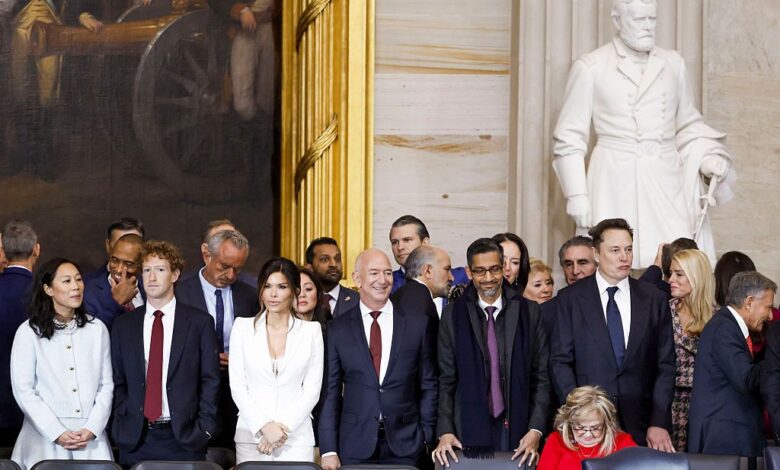
Over the past two years, several major tech companies in Silicon Valley have developed closer relationships with the Trump administration, with executives attending White House functions, companies reducing diversity initiatives, and leaders contributing substantial amounts to political action committees that support Trump and associated candidates. Policies enacted by the administration have also favored the tech sector, including tax incentives, a halt to certain federal investigations, and relaxed regulations on AI. Meanwhile, Meta has had to deal with lawsuits and significant financial penalties, and OpenAI is facing legal challenges related to user safety concerns.
As the balance of power shifts following the midterm elections, these companies are now focused on reestablishing connections with Democrats, who are promising increased scrutiny of AI technologies. The effectiveness of these efforts may hinge not just on improving public perception but also on critical developments occurring at the state level, community decisions regarding the establishment of data centers, and recent market reactions to the AI sector’s growth.
J.B. Branch, the director of federal AI governance and technology policy at Public Citizen, a nonprofit advocacy organization, remarked that the tech industry is aware of its public relations challenges. He referred to the hiring of Schumer and the rebranding as examples of “PR washing.” He anticipates more such efforts, citing OpenAI’s collaboration with the American Federation of Teachers and Anthropic’s introduction of the Claude Corps, along with Meta’s America’s Workforce Academy. “I would expect to see additional investment in corporate public-private partnerships,” he stated.
These strategies are not spontaneous; tech giants, including Meta, have reportedly been seeking to strengthen ties with Democrats in anticipation of potential gains in the midterms. A spokesperson for Meta directed inquiries about the elections’ impact to remarks made by Meta President Dina Powell McCormick, who stated, “You have to work with the government that the American people elect. It’s important to be bipartisan because you want support for your initiatives.”
However, some experts are skeptical. Alice Marwick, research director at the tech policy organization Data & Society, predicts that while Big Tech may attempt to shift towards a centrist or even left-leaning approach, it may be too late. “Tech firms should be considering how their products can positively impact lives, as this doesn’t currently seem to be the case,” she commented.
If Democrats pursue their commitments to amplify oversight over AI and the tech industry, a more challenging landscape may emerge for these companies. As moratoriums on data centers gain popularity, a slew of regulatory bills regarding AI is in the pipeline. During the same event, Powell McCormick emphasized that communities that embrace Meta’s investments could experience significant benefits, whereas those that oppose such initiatives would reserve the right to reject them.
Nevertheless, the next couple of years may see legislative gridlock in Washington. Aryan Ranjan, founder of Baraza, a political campaign management software firm, suggested that significant developments are likely to unfold at the state level, as many states have already initiated lawsuits against technology firms and implemented their own regulations. “A coalition of newer, working-class voters is expected to compel Democrats to frame discussions around AI in the context of utility costs, data center locations, and employment rather than abstract concepts of AI safety,” he stated regarding federal approaches.
Last December, an executive order by the Trump administration established an AI Litigation Task Force to contest state legislation on AI. The administration has maintained that U.S. companies must have the freedom to innovate without burdensome regulations, even as numerous states have enacted laws governing chatbots and deepfakes.
It remains uncertain how Trump will navigate this landscape, including whether he will issue additional executive orders on AI or reject laws seen as detrimental to the industry. Public sentiment appears to favor stronger regulatory frameworks around the technology.
In a statement from the White House, an official emphasized the importance of American leadership in super intelligence for national security and economic strength, adding that President Trump aims to maintain this leadership while safeguarding consumers. The official conveyed Trump’s openness to collaborating with various stakeholders to achieve positive outcomes for Americans.
Branch argued that Trump’s fortunes are intrinsically linked to the AI sector. Following the midterms, a substantial market sell-off has concerned investors, who are now reconsidering potential investments like Anthropic’s anticipated massive IPO. “There’s a high likelihood of an AI bubble bursting, potentially impacting Trump,” Branch warned, speculating on the fate of the market. “Will he rise or fall alongside the AI industry?”
For the time being, regulations affecting companies may vary depending on their locations. “Over the next two years, the rules governing AI operations may be dictated more by local regulations than federal legislation,” Ranjan concluded.