From Smooth Streaming to Seamless Robotics: His Journey from Video Players to Automation Solutions

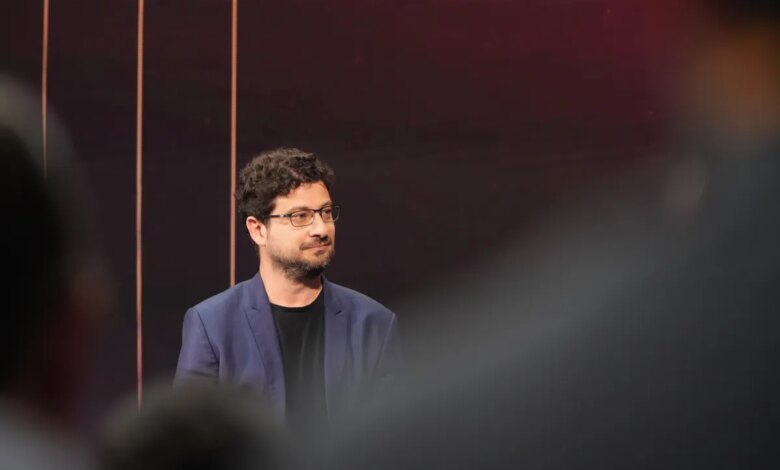
You might be familiar with VLC Media Player, the popular free video application symbolized by an orange traffic cone, which has been downloaded billions of times. Its lead developer, Jean-Baptiste Kempf, believes that in the near future, robots will be as common as this open-source software.
Convinced that “hundreds of millions of robots and drones” will soon populate urban areas, Kempf, a French entrepreneur and open-source advocate, is developing Kyber, a platform designed for real-time control of remote devices. The backbone of this platform is an SDK that integrates video, audio, sensor data, and control commands with minimal delay.
Kyber’s prospects align well with the emerging trend of physical AI, which has enabled the Paris-based startup to secure $5 million in funding led by Lightspeed, a venture firm known for backing notable companies like Anthropic and Mistral AI. “The effectiveness of physical AI is dependent on the foundational systems that support it,” Lightspeed stated in a LinkedIn announcement regarding their investment.
The applications for Kyber extend beyond just AI. Kempf explained to TechCrunch that the platform is designed for scenarios where the operator is located far from the computing power, which in turn is not close to the physical action.
Controlling devices remotely is one side of the equation, while speed is the other—this dual focus inspired the name Kyber, a reference to the lightsaber crystals from the Star Wars franchise. “Every millisecond is crucial when controlling aspects of the real world,” Kempf emphasized.
Kyber’s strategy to reduce latency is deeply rooted in technology utilized in video streaming. Originally a side project during Kempf’s tenure as CTO at a cloud gaming company called Shadow, its initial focus on streaming technology makes it easy to connect to VLC. However, having expertise in the Internet of Things (IoT) is equally vital for enhancing performance—optimizing it according to the available computing power of devices on a large scale is another key feature of what Kyber offers.
Kempf mentioned that other companies with sufficient resources have developed similar software tailored to their specific needs, such as for remote driving. “Currently, the largest fleets might manage 2,000 to 3,000 vehicles. Imagine managing millions; that’s an entirely different scale,” he remarked.
This significant scale elevation increases the importance of observability—being aware of whether systems are functioning correctly becomes more critical when AI agents take over the management of entire fleets. Even at smaller scales, there are clear advantages, such as not needing to physically access every device to implement software updates.
The versatility—from a few devices to potentially millions—implies that Kyber’s users will encompass a wide array of companies, many of which may not become paying clients. Staying true to Kempf’s philosophy, the foundational project is open-source, while the company offers a commercial version aimed at enterprise users. Beyond software, much like Palantir, Kyber provides hands-on, tailored deployment facilitated by forward-deployed engineers.
These engineers constitute a significant portion of Kyber’s workforce, which currently consists of 25 full-time employees. The startup is based in Paris but also has offices in San Francisco and Singapore to cater to a global clientele across diverse industries. Kyber is already engaged in commercial projects with customers in defense, telecommunications, robotics, and AI.
To streamline its efforts, Kyber is focusing on three main areas: robotics, various types of drones, and remote IT access, where demand has surged. In the remote IT segment, Kempf hopes Kyber will be more than just a competitor to Citrix—indicating a substantial market potential.
While remote IT access may not sound particularly exciting, Kempf appears passionate about addressing this challenge. Kyber’s careers page suggests this enthusiasm: “Companies that sought to tackle this problem have spent years and significant funds on custom solutions that are unlikely to be shared. We aim to create a version that everyone can utilize.”