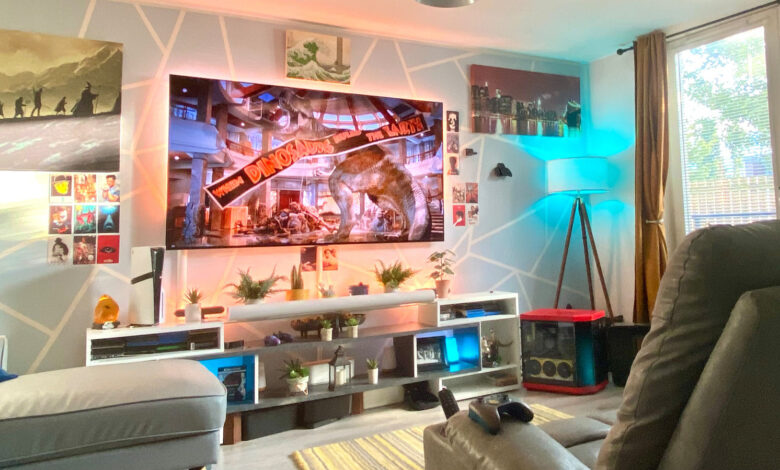
Have you ever wondered how far you should sit from your television? It’s a common query, especially with the rise of large, affordable screens. Determining the right viewing distance is crucial, as it can impact your visual comfort and overall experience. This guide will help you navigate the ideal television size for your living space and the recommended distance for optimal viewing.
Choosing the Right TV Size

There’s no definitive answer to what size TV is best, as it often depends on your room size. In smaller living spaces, like apartments, a 55-inch television might be the maximum size that fits comfortably. Conversely, larger homes might suit an 85-inch or larger unit.
Understanding the 30-degree rule can help. This guideline suggests that the screen should occupy 30 degrees of your view from a seated position. For instance, if you have a 55-inch TV, sitting about 7.5 feet away will enhance your experience without requiring you to strain your neck or squint.
There’s also the 40-degree rule to consider. More suited for a cinematic experience, it indicates that a 65-inch TV should have viewers about 6.5 feet away, which could be closer than what most families would find comfortable.
Optimal Viewing Distance
Finding the right distance to sit from your television is not just a matter of preference; there are some scientific guidelines. According to the Society of Motion Picture and Television Engineers (SMPTE), sitting about 1.6 times the diagonal measurement of your TV screen is ideal. So, for a 65-inch screen, that would mean about 8.8 feet away, while for a 75-inch TV, you’re looking at roughly 10 feet.
Sitting too close can lead to eye strain, although it typically won’t cause long-term damage. A safe distance allows your eyes to relax as they track the image without excessive movement.
Ultimately, your comfort and the layout of your room will dictate how far you sit. Personal preferences and factors like whether you need reading glasses will also play significant roles in this decision.
The Trend Toward Larger TVs
Larger screens are becoming increasingly popular as people seek more immersive viewing experiences. With displays now featuring 8.29 million pixels, a larger screen makes it easier to appreciate the details of 4K content.
The decline in production costs has also made big screens more accessible. You can now find substantial 65-inch models at relatively low prices, making gigantic televisions a common choice in many households.
With slimmer profiles and modern aesthetics, today’s TVs don’t just serve a functional purpose; they can also enhance the decor of your living room, signifying a shift from older, bulkier models.
Is a Bigger TV Okay on a Smaller Stand?
Generally speaking, it is acceptable for your TV to be larger than the stand it rests on, provided the entire unit is stable and supported. While it may not look perfect, as long as it fits securely, there should be no major concerns.
However, exercise caution; a TV that overhangs can be more susceptible to tipping. Make sure to verify the weight capacity of your stand and do not place a large television on a cabinet designed for much smaller models.