Investors Unveiled: Insights on Pile-Ins, Payouts, and the Race for Funding in Venture Capital

Investors who supply capital to venture firms are currently experiencing a wave of optimism. As they navigate through unique and potentially profitable circumstances, their confidence remains strong.
Typically, investors diversify their investments across various firms to balance risk and maximize returns. They allocate funds to both new and well-established managers, covering a range of generalist and specialized firms.
However, the usual strategies are being reconsidered. The soaring valuations of OpenAI and Anthropic have led multiple investors to converge on these two companies, often through the same venture firms, breaking the traditional guidelines that discourage overlapping investments. Yet, this trend seems to be met with approval among investors, who are anticipating significant gains.
Nevertheless, concerns linger about the rapid pace at which venture capitalists are returning to secure new funding, prompting cautious discussions among limited partners about potential risks ahead.
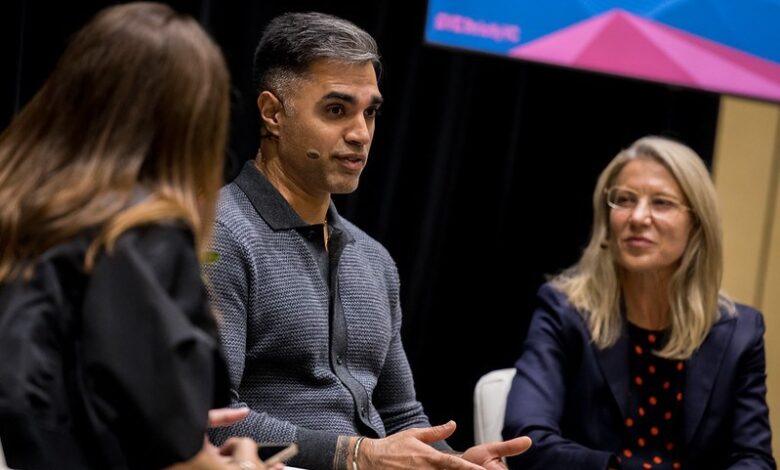
I recently engaged in a conversation with Beezer Clarkson from LGT Capital Partners and Amit Bhatti of TrueBridge, a venture-focused firm. Their insights, which have been shortened for clarity, offer a glimpse into the current landscape.
Given the excitement and uncertainty of these times, how are you both positioning yourselves within this evolving startup ecosystem?
Beezer Clarkson: It’s an incredibly busy time, but I don’t find it scary. The ongoing changes add excitement, and having spent many years in the industry, I appreciate the cyclical nature of it all. We should revel in the positive moments, as downturns will inevitably follow.
Amit Bhatti: It’s an exhilarating time for venture capital. While venture is often seen as a niche, the overwhelming focus on AI is bringing it to the forefront. This is a pivotal moment, and although the dynamics of investing and valuations are shifting, significant advancements are taking place.
With your funds heavily invested in the same organizations like OpenAI and Anthropic, how are you managing diversification? Great returns are evident now, but risks loom if circumstances change.
Amit Bhatti: The inherent nature of venture capital leans toward concentration, and I view this as a positive. As funds mature, they usually consolidate into fewer notable investments. It’s expected to have significant stakes in companies like Anthropic and OpenAI. However, the speed of this consolidation is unusual, though not necessarily alarmingly so.
Beezer Clarkson: At the early stages, there are still varied opportunities, even though the larger investments are more concentrated in established firms. Early-stage funds often pursue smaller investments, allowing for greater diversity.
As funds reduce their investment cycles from four years to one, is this rapid pace concerning?
Beezer Clarkson: Some funds are indeed coming back to raise capital on an annual basis, which is rapid. Traditionally, a two- to two-and-a-half-year norm was expected. While some firms are investing faster through concentrated positions, this can be a warning sign, as quick investments can be tricky to manage effectively.
Amit Bhatti: Similarly, while 24 to 36 months used to be the norm, 12 to 18 months is becoming common for some funds. Additionally, many funds are increasing their sizes mid-cycle, a departure from typical practices. If substantial capital is raised swiftly, it raises some concerns, particularly given that recent rounds have become quite large, magnifying the stakes involved.
When we analyze the nature of the investments made at this accelerated pace, there’s a notable difference. Unlike the prior period of frenetic investment in speculative ventures, we’re now observing firms scaling from ground zero to substantial revenues.
If a solid manager continually returns but their returns remain theoretical, do you risk losing your position by stepping back?
Beezer Clarkson: Exiting a management relationship and returning later can be challenging. While it does occur, many prefer to reduce their contributions. In 2021, several limited partners opted to halve their expected contributions, reflecting the evolving landscape.
Amit Bhatti: We, too, are developing timelines for our commitments. If a manager deviates significantly from this plan, we’re compelled to ensure funds are accessible. Observing downsized contributions is not uncommon, as being viewed as unreliable capital can limit future opportunities.
Beezer Clarkson: Additionally, some investors disengage from venture altogether due to continual capital requests without corresponding returns, creating operational challenges across various organizations.
Limited partners usually advocate for temporal diversification, yet a multitude of funds have emerged recently, many at inflated valuations. How are these funds performing, especially looking ahead to 2026?
Beezer Clarkson: We’re still early into the 2021 cohorts, and they underscore the case against one-year funds. While some will undoubtedly identify strong AI ventures, securing accurate predictions within a single year poses significant challenges given the inflated valuations.
Amit Bhatti: Analyzing our portfolio over the last 15 years, I wouldn’t bank on the COVID cohort emerging as the top performer. Yet, a few breakout success stories may arise. Companies like OpenAI and Cursor have roots in that era. Liquidity has started to increase recently. Although the previous two years were slower, we are now witnessing notable mergers and acquisitions, lifting overall market activity.
How are your venture fund managers contemplating secondary investments? Wouldn’t a VC be inclined to cash out on investments like OpenAI or Anthropic?
Beezer Clarkson: The secondary market for venture has matured considerably over the past five years. While it remains largely concentrated in a handful of leading companies, it’s become more pervasive, enhancing the ecosystem’s liquidity options.
Amit Bhatti: It’s now regarded as a crucial element of liquidity management alongside IPOs and mergers. The previously negative perception of selling secondary stakes has shifted, and managers are beginning to use it strategically. If a company is deemed a considerable player, a full exit might not be viable, but selectively selling a portion could enhance fund returns.
With numerous founders and employees selling early on, how do you perceive this trend?
Amit Bhatti: We previously drew parallels to the crypto market, which faced challenges partly due to employees receiving immediately liquid tokens. Therefore, providing partial liquidity through employee tenders, especially at well-established companies, seems entirely reasonable. However, lead investors play a critical role in guiding these decisions.
Once these companies go public and employees achieve liquidity, do they become allies or competitors to your venture managers?
Beezer Clarkson: It’s not uncommon for employees from successful companies to emerge as limited or general partners themselves. We may witness a new wave of emerging managers influenced by talent from companies like OpenAI and Anthropic, reminiscent of past trends from firms like Google.
Amit Bhatti: High housing costs in San Francisco pose significant challenges, but individuals often remain in the ecosystem, continuing to invest, launch new companies, and establish firms. This ongoing engagement suggests that San Francisco’s dominance in the startup landscape will endure.
As housing prices in San Francisco escalate, do we risk alienating the next generation of entrepreneurs, potentially shifting the focus to New York or elsewhere?
Beezer Clarkson: Historically, the dense network in the Bay Area has remained a powerful attraction. It may evolve to extend beyond San Francisco into surrounding suburbs, but the region’s unique appeal is challenging to replicate elsewhere.
With a handful of venture funds capturing the majority of limited partner capital, is there still an opportunity for emerging managers?
Beezer Clarkson: Numerous first-time and emerging managers are successfully raising funds today, albeit at smaller scales compared to larger established firms. A unique perspective and purpose are essential for fundraising success, and while gaining attention can be challenging, small funds can collectively add up to significant amounts.
Amit Bhatti: Many are raising smaller funds within San Francisco, transitioning from angel investing. In fact, many successful funds began with minimal capital. Emerging managers can thrive by establishing their track records and leveraging their insights, making subsequent fundraising efforts much more feasible.
Beezer Clarkson: First-time managers face different dynamics compared to those who are transitioning from established networks, which often aids in capital acquisition.
Can you share examples of the emerging managers you’ve supported, detailing what influenced your investment decisions?
Amit Bhatti: The term “emerging” can be interpreted in various ways. We’ve backed founders who manage companies while also investing, as well as individuals transitioning from larger firms. We also support young GPs with direct ties to the next wave of AI founders, who have significant potential.
Beezer Clarkson: There’s increased openness in current times. Previously, LPs hesitated to fund individuals juggling operational roles while investing, but that perspective is shifting. My history of investing in both emerging and established managers reflects this trend, showcasing a wide spectrum from smaller funds to significant spinouts.
Amit Bhatti: Particularly at the early stages, there is no single effective model for success. Various strategies, whether part-time or full-time, can prove valuable in delivering returns on experimental ventures.
What is the minimum investment you would consider for a fund, and how much of a fund would you typically want to take?
Beezer Clarkson: Due to our program requirements, it’s challenging for us to invest below $5 million. Generally, I prefer not to account for more than 20% of a fund to avoid future complications for the general partner.
Amit Bhatti: Our range is typically between $3 to $5 million, although smaller amounts can be considered in specific cases. We prioritize diversification for general partners, but we’ve occasionally taken larger stakes based on performance and trust built in previous funds.