Khosla Ventures Bolsters Investment in Even Healthcare to Disrupt India’s Hospital Financial Landscape

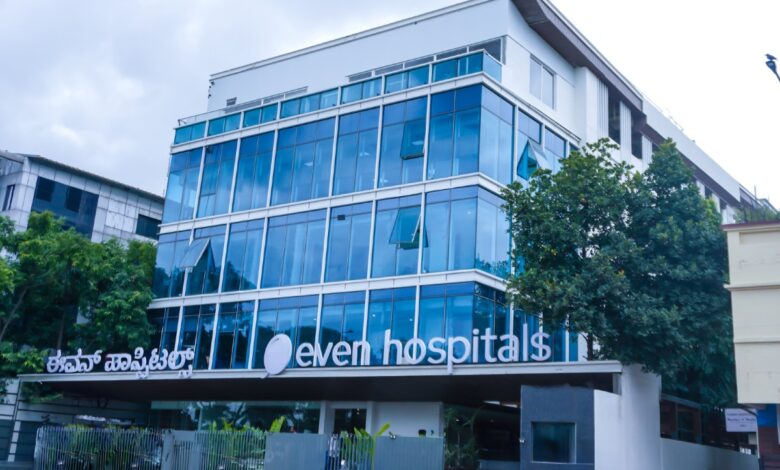
Even Healthcare has successfully raised $50 million in a funding round led by Khosla Ventures, as the Indian startup aims to transform the financial model for hospitals in the country and redefine how doctors are compensated.
This Series B funding, which is entirely equity-based, also received contributions from Alpha Wave and has increased the company’s valuation to $300 million, a threefold increase from 18 months prior. With this latest capital infusion, Even has now secured over $120 million in total funding.
In the typical healthcare landscape in India, hospitals often earn more by encouraging patients to undergo extra tests or lengthy treatments, sometimes even when they aren’t necessary. Even Healthcare aims to shift this focus towards genuine patient care, moving away from unnecessary services that inflate medical expenses.
Khosla Ventures has maintained its support for Even since the company’s seed funding in 2021, demonstrating continued confidence in their strategy as Even moves towards establishing and operating its own hospitals. This model will enhance control over patient care and associated costs.
Vinod Khosla, the founder of Khosla Ventures, stated that Even’s innovative approach seeks to address not just individual flaws within the fragmented healthcare system but to integrate financing, technology, and care to foster improved health outcomes rather than mere service utilization.
“The results, both clinical and financial, reinforce our belief that this could develop into a pivotal new healthcare model in India and potentially elsewhere,” Khosla remarked.
Initially, Even depended on partnering hospitals for treatments, but co-founder Mayank Banerjee mentioned in an interview that they began reevaluating this dependence. Concerns arose when patients were found to be undergoing unnecessary tests and surgeries.
“We realized that patients were experiencing inadequate care, and insurers weren’t receiving the best value. Hence, we decided to address this issue by creating our own hospitals,” Banerjee explained.
Since then, Even has established two hospitals in Bengaluru, both achieving operational profitability (excluding depreciation) within their first year. The startup plans to open five additional hospitals in the city within the next six months, funded by the recent investment.
Banerjee indicated that Even leases hospital facilities for a duration of 20 years, investing in their outfitting and acquisition of medical equipment.
In contrast to hospitals that may financially incentivize doctors to recommend additional procedures, Even provides its medical staff with fixed salaries, disconnecting pay from the number of performed tests or surgeries. Banerjee noted that doctors can earn bonuses based on positive patient-reported outcomes.
This principle extends to hospital management, where compensation is based on fixed salaries and collaborative incentives rather than individual procedural counts. Moreover, all employees, including doctors and staff, receive equity in Even, fostering a sense of ownership and commitment to long-term success, rather than rewarding them for increasing medical expenses.
Much of Even’s income stems from direct patient payments for services, though the company also benefits from partnerships with insurance providers. Additionally, it is collaborating with insurers on a compensation model that would reward them for preventing hospital admissions, not just for increasing treatment volumes.
Banerjee further noted that Even monitors patient recovery using established medical scoring systems. For example, they utilize the Oxford Knee Score for assessing knee replacement patients concerning pain levels and mobility. These results are made available on their website for public comparison with other healthcare systems.
Even claims to have an unplanned readmission rate below 1%, significantly lower than the typical 8% to 15% industry averages. Additionally, patients reportedly experience 40% shorter hospital stays, and the company’s practices have saved insurers over ₹500 million (around $5.27 million).
Jai Sajnani, a partner at Khosla Ventures, expressed that the early positive outcomes from Even’s hospitals played a crucial role in securing investment for the round, adding, “We are excited to assist the Even team in making quality care accessible for families in Bengaluru and throughout India.”
Despite its innovations, Even is still operating at a loss. The startup recorded a net loss of ₹902 million (approximately $9.50 million) in fiscal 2025, a rise of nearly 25% from the previous year, with revenue amounting to ₹272 million (around $2.86 million), as per regulatory filings.
In a recent development, Even laid off approximately 350 staff members, as reported by an Indian startup news platform. Banerjee described this restructuring as a challenging decision, assuring that those affected received severance packages, extended health coverage, and accelerated equity vesting.
Currently, Even employs about 650 individuals, including roughly 300 full-time physicians. Since its launch in 2021, the startup has accumulated around 250,000 members and provided over 750,000 patient interactions encompassing consultations, diagnostic tests, and surgeries, according to Banerjee.
Banerjee indicated that Even could achieve profitability soon if it ceased its expansion ambitions; however, the startup is opting to prioritize growth. He refrained from specifying a timeline for when it expects to reach profitability.
“At present, our focus is on growth and enhancing patient service,” Banerjee concluded.