Replit’s CEO envisions a future where companies operate like self-driving vehicles

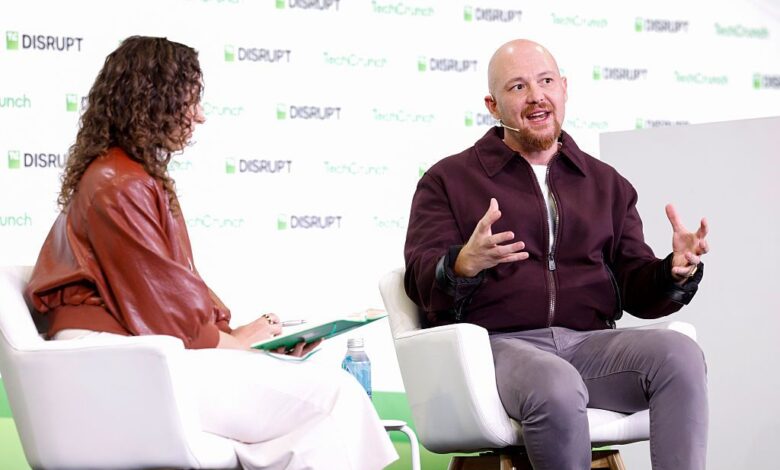
Amjad Masad, CEO and co-founder of Replit, has observed the effects of AI on employment as businesses increasingly utilize his company’s AI coding tools to create and introduce their own software. During his address at TechCrunch Disrupt in San Francisco, Masad outlined insights from Replit regarding the implications of AI for the future of work, emphasizing that human roles will remain essential as AI systems become more integrated into the workplace.
He articulated his concept of a “self-driving company,” highlighting that it refers not to autonomous vehicles, but to how AI agents could handle much of the routine tasks within an organization, allowing humans to be recognized for their decision-making and creativity.
“The truth is, everyone’s job — particularly those in this audience — has evolved over the last year,” he remarked, engaging with the audience at the event. “However, a significant portion of America and the globe remains unaware of this upcoming change, which will certainly catch many by surprise,” Masad asserted.
He noted that Replit’s team has been contemplating how AI advancements have influenced their workplace in recent months, especially after the reliability of AI agents improved earlier this year.
“Our operations have transformed entirely, and I liken it to being a ‘self-driving company’,” Masad explained. “Our organization is continuously improving itself, as much of the work is now performed by agents.”
To exemplify this transformation, Masad shared that when support requests arrive at Replit, they are initially assessed by an AI agent, which performs the first-level analysis by reviewing GitHub issues, the codebase, and Linear tickets. By the time the request reaches a human, they have all the relevant information necessary for an informed response.
Furthermore, when a support team member chooses to implement a solution, deploying another agent is simply a click away.
“This creates a complete process where agents carry out most tasks; however, human judgment is still crucial in the middle of this workflow, and we believe that won’t change anytime soon. Human insight and taste are indispensable,” Masad clarified.
Ultimately, rather than replacing jobs, these agents are altering the focus of human work.
“We’re now dedicating much more time to deciding what we should work on,” Masad noted. “As I move around the company, I observe increased dialogue, more collaborative planning, and a greater focus on architecture and building processes. Thus, the notion of the self-driving company serves to explore the meaning of AI-driven transformation.”
He added that conversations with other companies increasingly center around how AI can enhance employee productivity and satisfaction, as the AI agents help reduce mundane tasks and foster creativity.
“A more optimistic vision of the future isn’t something Silicon Valley has emphasized, and we aim to change that,” Masad concluded.