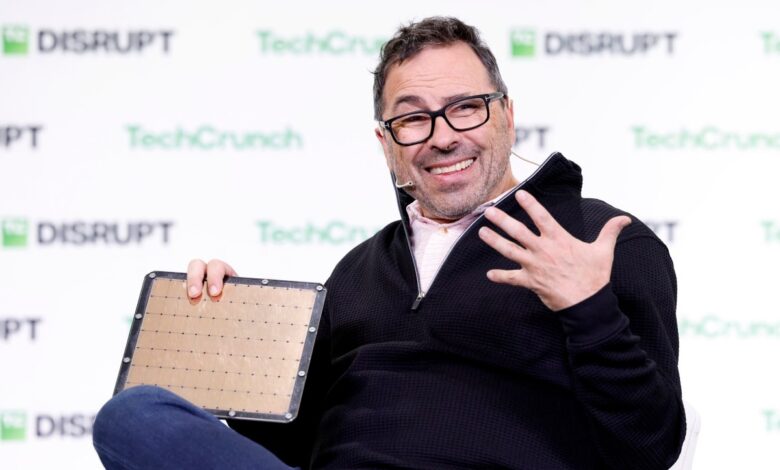
Andrew Feldman, the CEO and co-founder of Cerebras Systems, believes that the prevailing negative narrative around AI isn’t beneficial for the industry. At TechCrunch Disrupt 2026, he humorously suggested that some prominent figures in the AI sector should reconsider their public statements.
Feldman was highlighting the growing concerns regarding AI risks, such as potential model failures and discussions among experts about the likelihood of AI posing existential threats to humanity within the next few years. This conversation has gained traction to the point where even Anthropic’s CEO, Dario Amodei, was playfully mocked on a recent episode of “Saturday Night Live,” with a character encapsulating the skepticism with the line, “We do not condone what we are doing.”
Despite the alarming discourse, Feldman believes that the significant benefits of AI development are being overshadowed. He posits that industry leaders ought to focus more on the transformative potential of AI, suggesting that advancements could lead to breakthroughs such as eliminating cancer, even while acknowledging the inherent risks.
Feldman’s positioning is influenced by Cerebras’ clientele, which includes major organizations in the AI field, such as OpenAI, Block, and pharmaceutical giant GSK.
He recognizes the necessity of balancing the potential risks and rewards associated with powerful technologies.
“Every powerful technology brings the concern of misuse. You cannot create such technologies without acknowledging this duality,” he explained during the event. “It’s critical to understand the power of this technology and approach it with careful regulation,” he continued.
Furthermore, Feldman suggested that some of the negativity surrounding AI stems from the data center industry’s lack of engagement with local communities regarding new infrastructure demands.
“As an industry, we’ve lacked the proactive community collaboration seen in sectors like oil and gas,” he remarked. “We haven’t effectively involved the community, which has created challenges.”
He contrasted the resistance seen in the U.S., often referred to as NIMBY—“not in my backyard”—with countries like Brazil, Canada, and Sweden, which are actively welcoming data center developments.
Feldman also expressed confidence that advancements in efficiency won’t diminish demand for his chips or those from rivals, including Nvidia.
“As hardware suppliers, we can optimize our computations, while model creators can enhance their efficiency as well. This collaboration is essential for significant progress,” he noted.