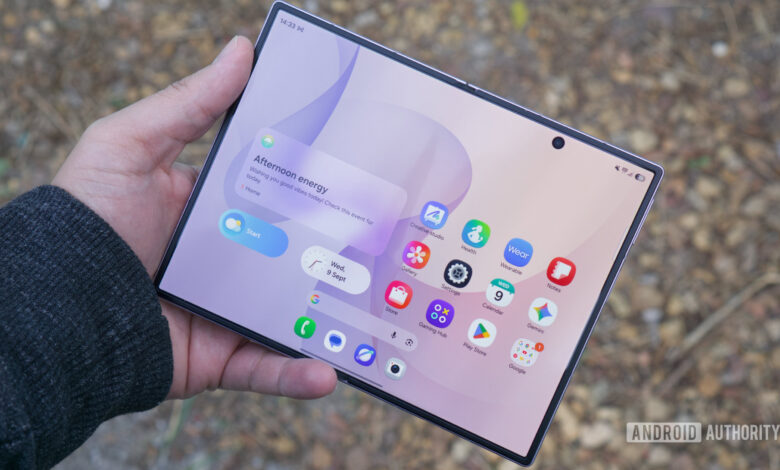
Samsung’s Galaxy Z Fold 8 represents an innovative step into the wide-format foldable market, seemingly setting the standard for large foldable devices. Although it features minor limitations that may prevent it from being a fully functional flagship for everyone, it stands out as a well-designed Android foldable for many users.
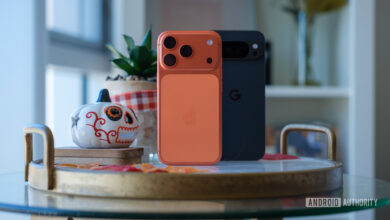
In July, during its Unpacked event, Samsung introduced three foldable devices, with the Galaxy Z Fold 8 grabbing significant attention during the preview session. This phone’s unique short and wide design sets it apart from both the Galaxy Z Fold 8 Ultra and its predecessors. While not the first wide foldable on the market—following offerings from Google, OPPO, and HUAWEI—it is clearly the most popular option running on the Android OS, especially now that Apple is entering the foldable space with its own competitor, the iPhone Duo.
Although I nearly pre-ordered the Z Fold 8, I hesitated at the checkout. After spending two weeks with Samsung’s much-anticipated “Wide Fold,” I’m now questioning whether avoiding the purchase was a mistake. Let’s dive into our comprehensive review of the Samsung Galaxy Z Fold 8.
So close, yet so far away
Hadlee Simons / Android Authority
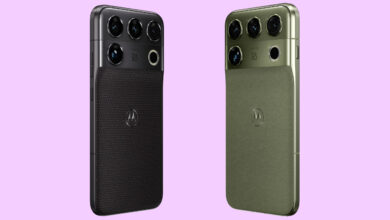
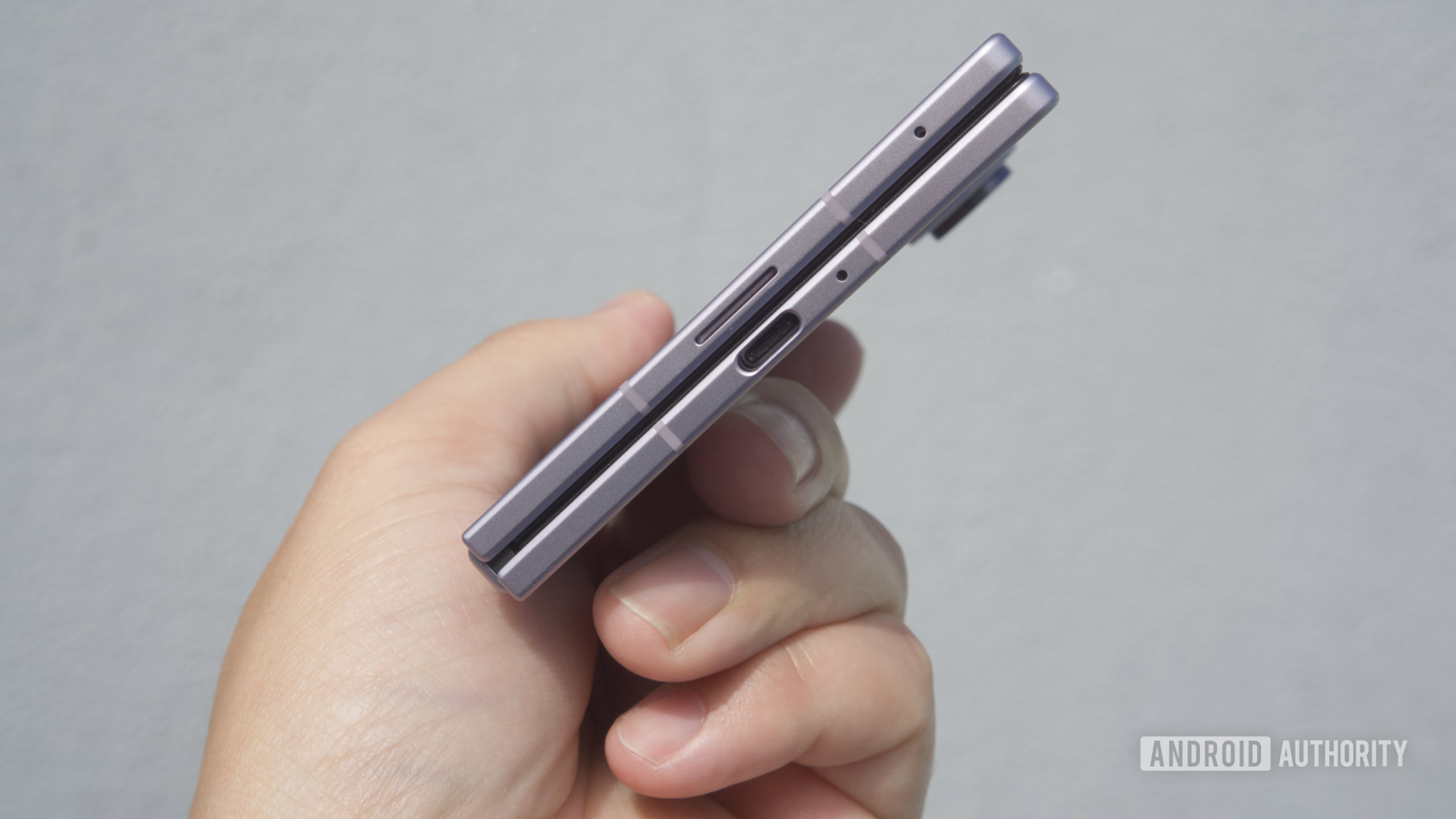
Upon first viewing the Galaxy Z Fold 8, my immediate impression was how compact it felt. Measuring 123.9mm in height, it stands shorter than many smaller Android devices, even the likes of the iPhone 13 Mini. The device is also surprisingly thin for a foldable, at 9.7mm when closed and 4.5mm when opened. The 201-gram weight makes it lighter than both the Z Fold 8 Ultra and the iPhone Duo.
In terms of design, the Galaxy Z Fold 8 boasts a sturdy aluminum frame complemented by a Flex Titanium hinge that enhances crease management and impact resilience, along with Gorilla Glass Victus 2 on its back. Interestingly, during my time using the device, an accidental drop onto a tiled floor from about 1.2 meters resulted in no visible damage.
While I appreciate the design choices, the sharp corners of the phone detracted from my experience. They’re not as uncomfortable as previous models, but I would have preferred a more rounded design. Moreover, the location of the rear camera results in noticeable wobbling when tapping either display while the device is placed on a flat surface.
A significant drawback is the Z Fold 8’s IP48 rating, indicating that while it can withstand water immersion, it has no dust resistance. In a market where competitors often offer IP58 or IP68 ratings, this is disappointing, suggesting hesitance for outdoor usage in dusty or sandy conditions.
The Galaxy Z Fold 8 has my favorite foldable screen
Paul Jones / Android Authority
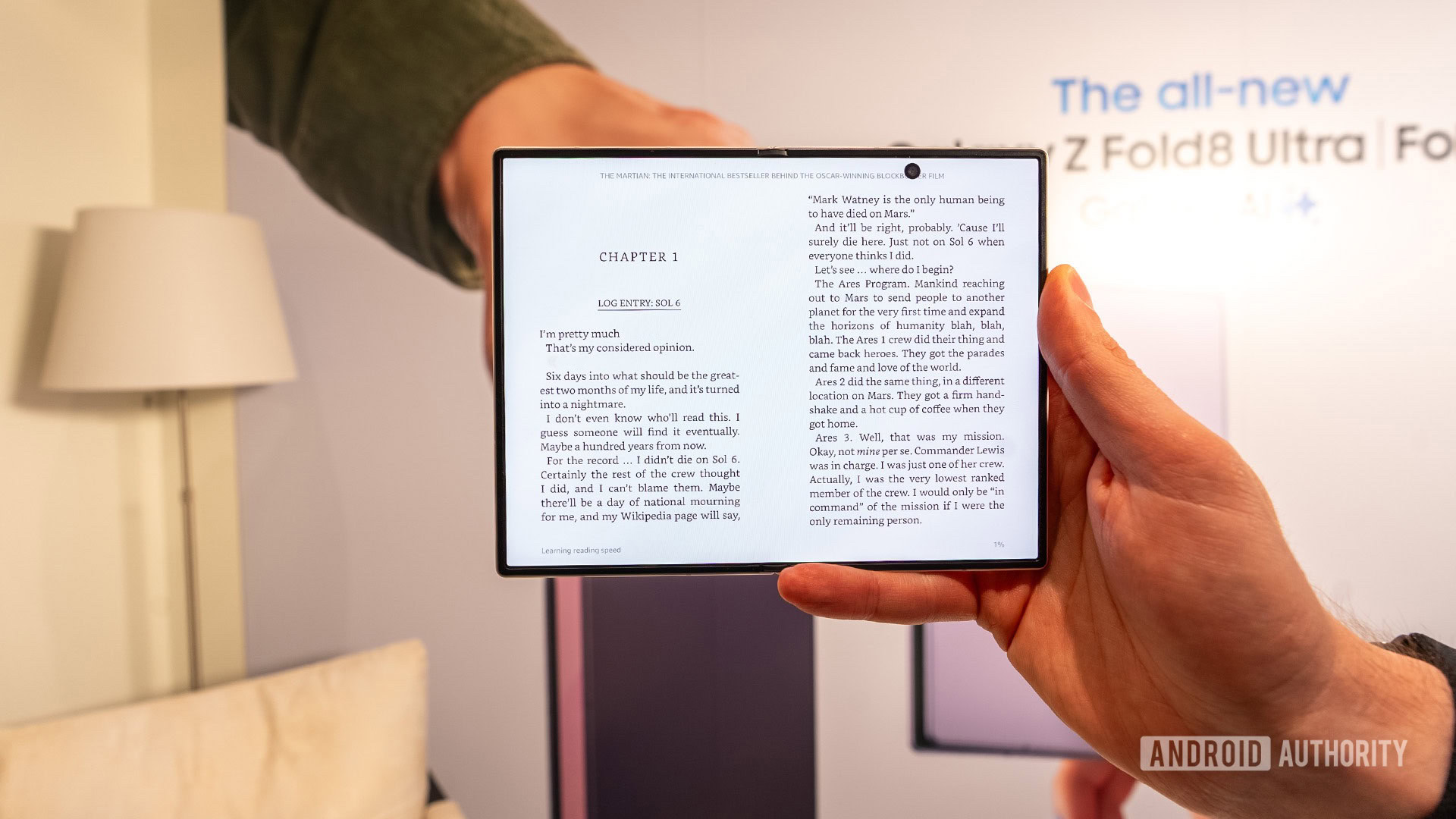
The anticipation around the Z Fold 8 largely stemmed from its inner 7.6-inch folding display, maintaining a square-like ratio that supports multitasking but often results in letterboxing with standard video content. Transitioning to a 4:3 aspect ratio allows for better compatibility with older videos, effectively minimizing black bars when streaming.
Moreover, for various applications like the Kindle app, default settings now allow for two-column views, enhancing the reading experience akin to physical books. Additionally, playing Nintendo DS games on the Z Fold 8 felt natural due to its layout, with screens mirroring the actual console setup.
The display crease remains present but is less pronounced than other models, making it less distracting during regular use. However, the visibility of fingerprints and grease on the screen persists, a reminder of the plastic display and the care required to maintain it.
Samsung also made a misstep by eliminating Flex Mode, which previously allowed for partial folding similar to a laptop. The absence of this feature restricts the versatility of using the device for various activities, particularly video watching and angled placements for photographing.
Hadlee Simons / Android Authority
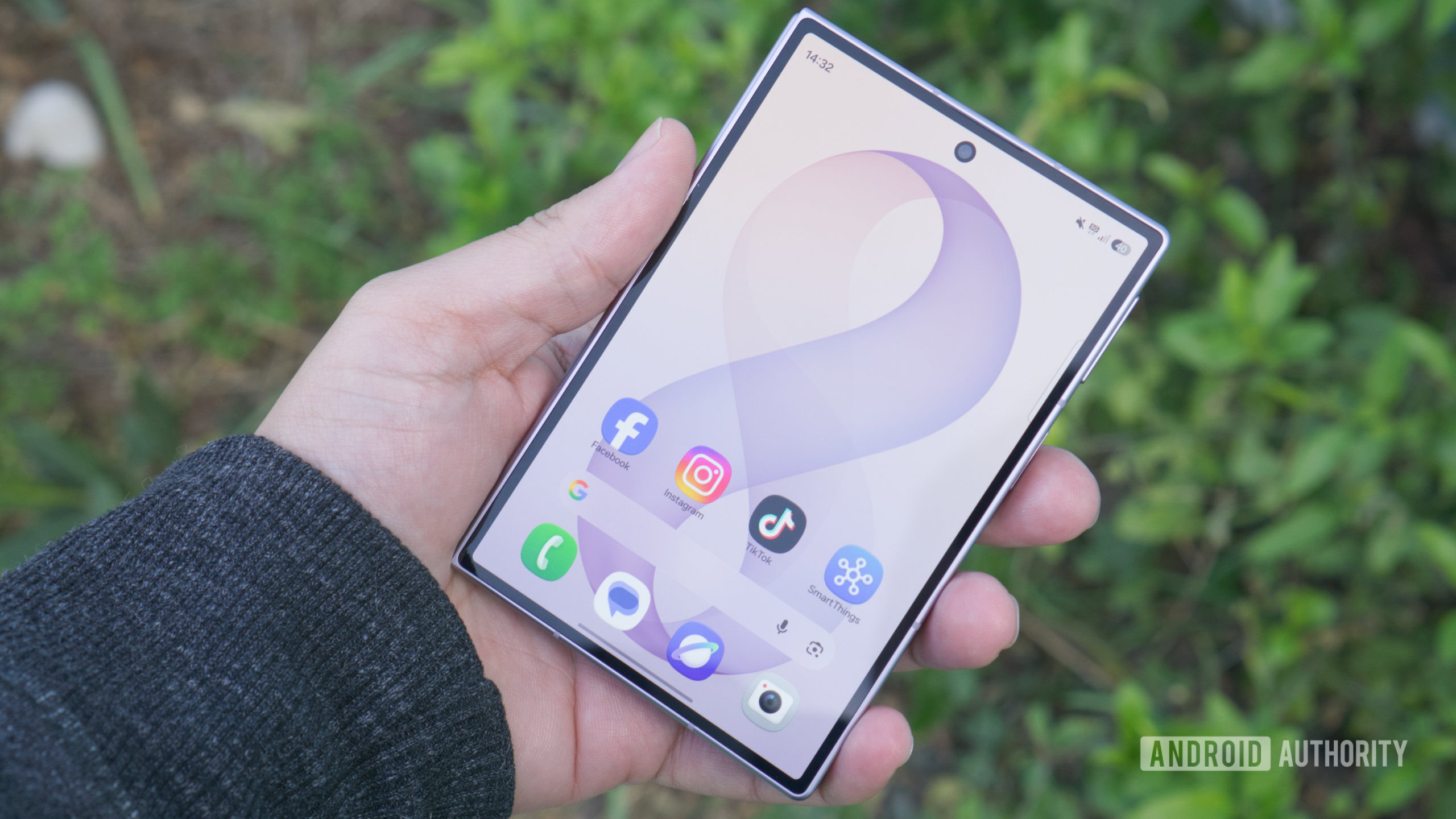
The primary display is expectedly the 5.5-inch cover screen, which boasts a 16:10 aspect ratio. While its dimensions initially felt awkward, its stubby design eventually felt more manageable, though navigating to corners required considerable effort.
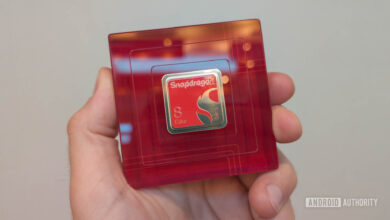
Performance-wise, the Galaxy Z Fold 8 is equipped with the Snapdragon 8 Elite Gen 5 chip, accompanied by 12GB to 16GB of RAM and storage options ranging from 256GB to 1TB, promising robust performance.
In our Geekbench 6 tests, the results showed that while it performs well in single-core tasks, the Galaxy S26 slightly outperforms it in multi-core tests. However, the Z Fold 8 does surpass the Z Fold 7, showcasing improvements in processing power.
Real-world use revealed that the Galaxy Z Fold 8 ran smoothly with demanding applications and games. It hosts a decent 4,800mAh battery, extended from last year’s capacity, providing users with sufficient daily endurance.
Hadlee Simons / Android Authority
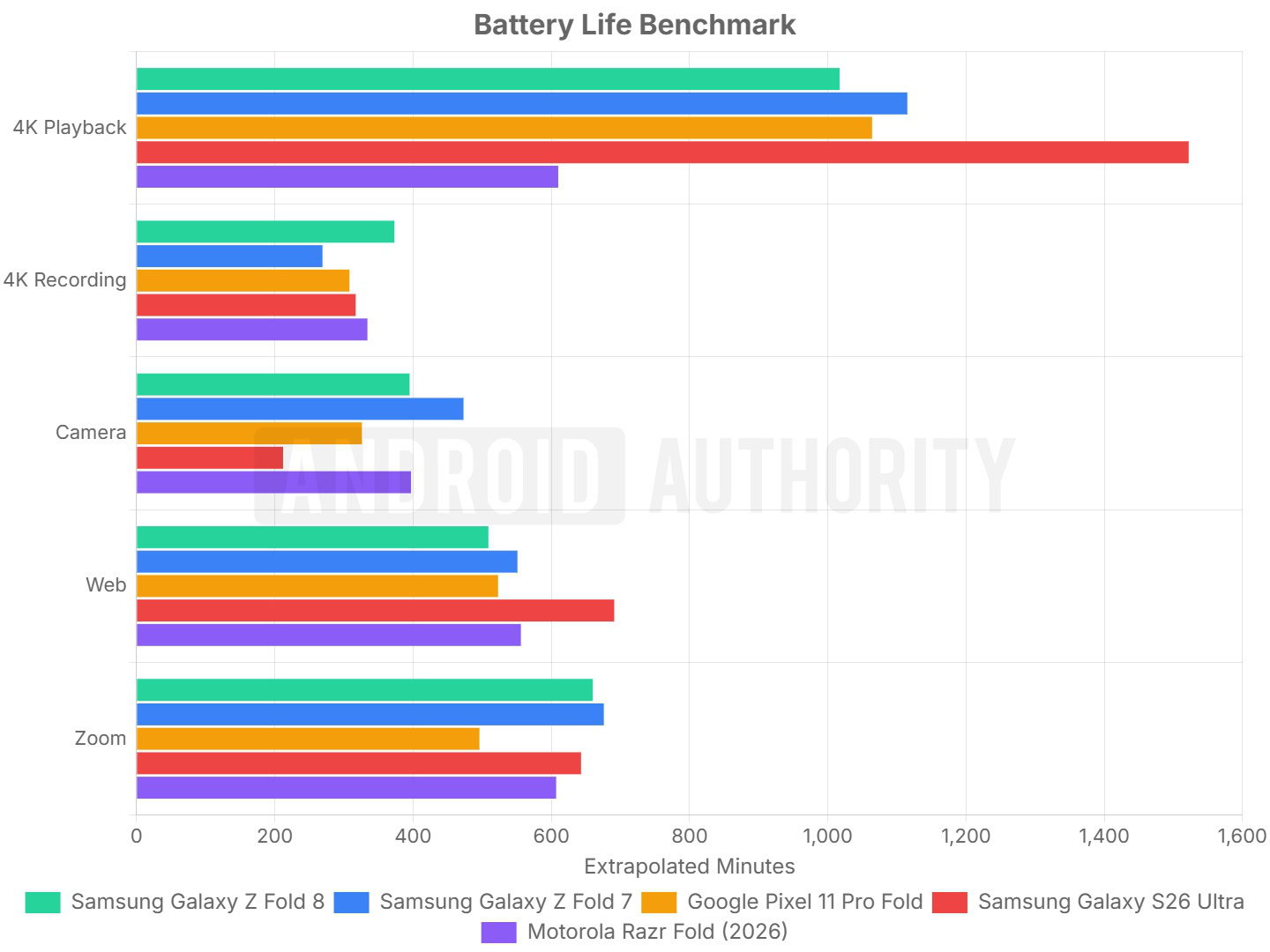
The Z Fold 8 delivered solid performance across various tasks, managing to run heavy applications without a hitch. Generally, it provides stable battery life, lasting about eight to ten hours during regular usage. Utilizing communication apps, social media, and streaming content translated into nearly two days of battery life for casual users.
Hadlee Simons / Android Authority
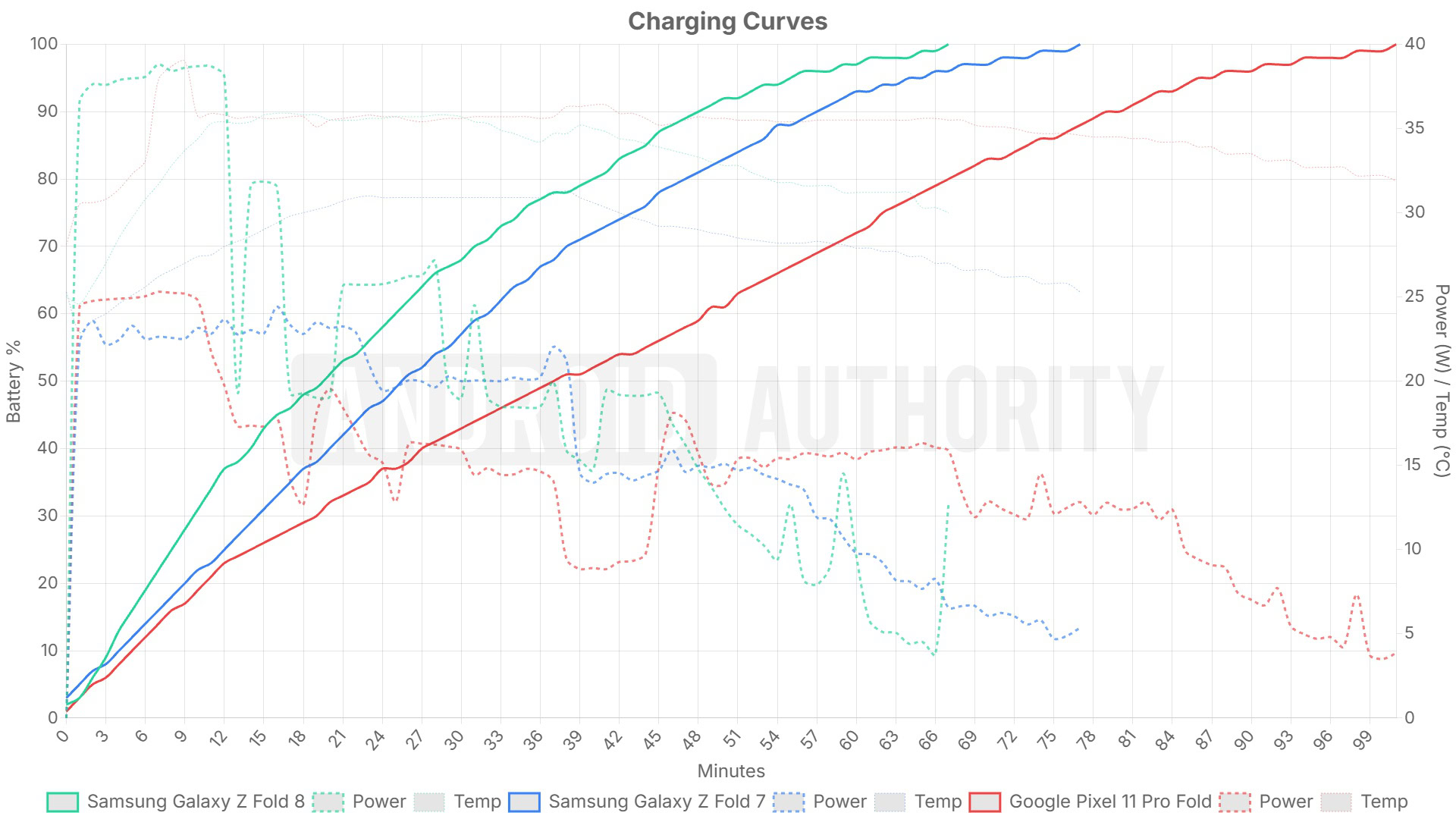
Charging is facilitated through a 45W wired or 20W wireless system. Although the charging times are not the fastest, peaking around 38W, they are competitive for a foldable device as of 2026.
You’re not buying the Galaxy Z Fold 8 for the cameras
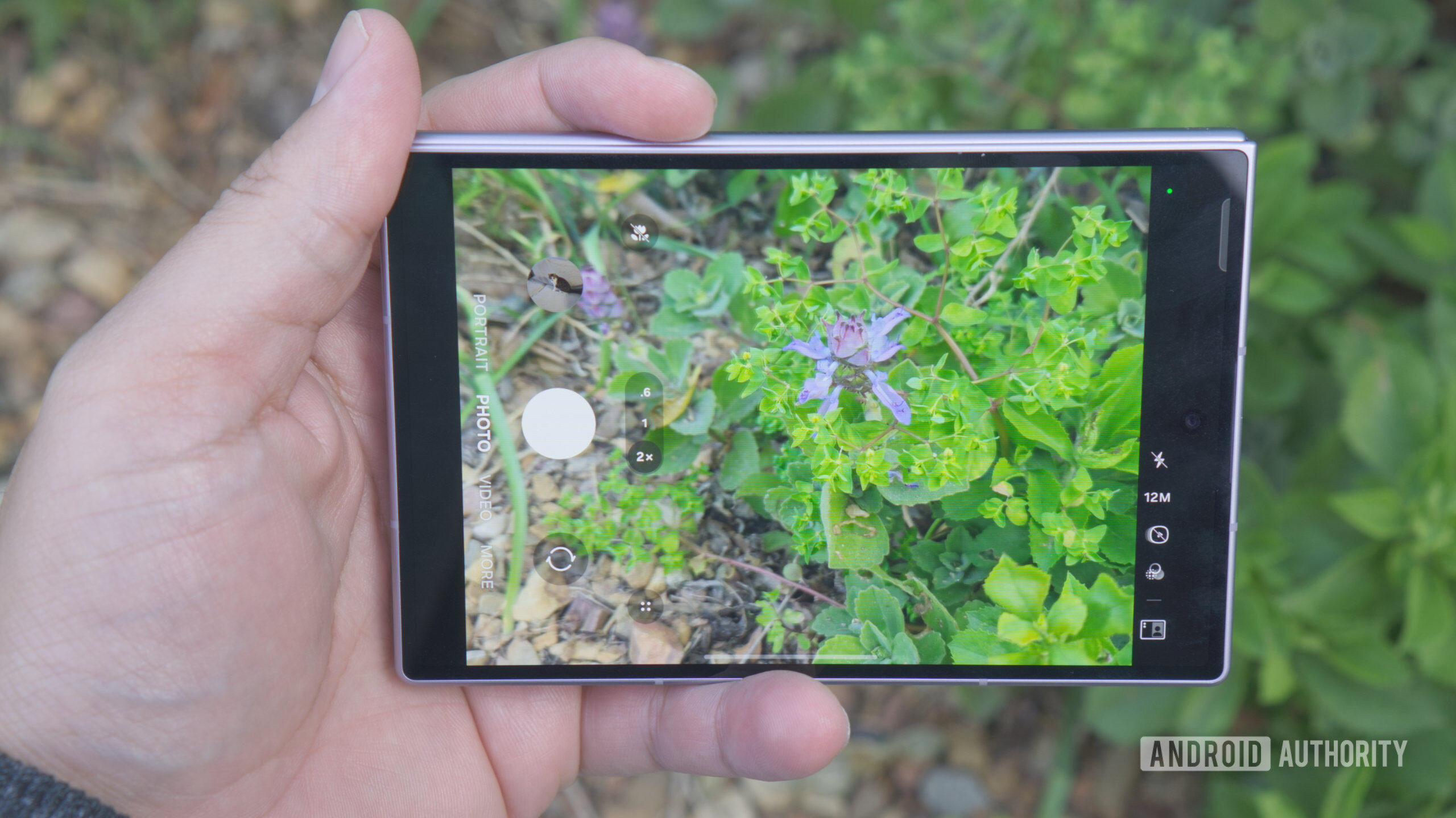
The camera setup on the Galaxy Z Fold 8 features a primary 50MP and a secondary ultrawide lens, which deliver satisfactory image quality overall, despite some inconsistencies like fringing and color variances. The absence of a telephoto lens limits its photographic versatility, which may disappoint users looking for a complete camera experience.
Hadlee Simons / Android Authority
While video capabilities offer decent stability and a variety of resolutions, the functionality remains focused on casual use, as seen with the new My FanCam feature, mostly functioning on people rather than pets.
On the software front, Samsung’s One UI 9, based on Android 17, is equipped with new functionalities like Call Brief and custom information cards, though the practical utility of these features may still be in question.
The Samsung Galaxy Z Fold 8 is undoubtedly an excellent representation of what a foldable phone can achieve, combining an enticing design with effective battery life and performance. However, certain shortcomings, such as the limited IP rating and camera capabilities, may deter potential buyers looking for a complete flagship experience.
This is precisely the design I seek in a foldable, yet I still feel I might be better off waiting for the Z Fold 9.
In conclusion, while the Galaxy Z Fold 8 impresses, potential customers might consider awaiting future models or alternatives like the Apple iPhone Duo that offers enhanced features.