Ex-Google DeepMind Team Innovates Tools to Propel Fusion Power for Grid Integration

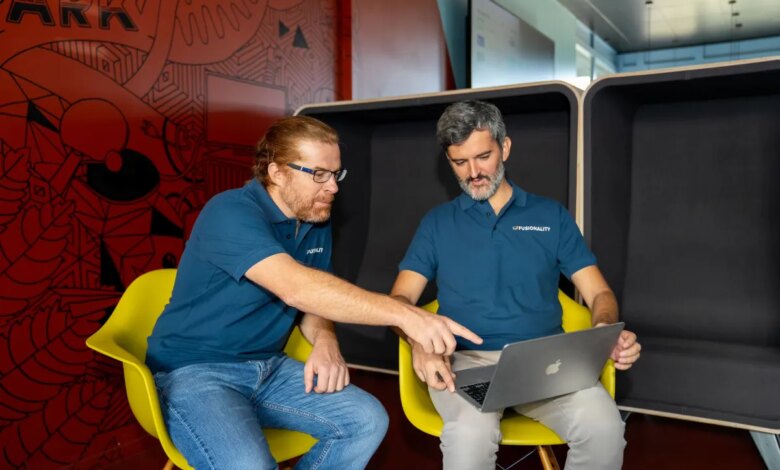
For some entrepreneurs, the perfect startup idea can be a rare find, while for others, it appears unexpectedly. Federico Felici and Jonas Buchli fall into the latter category.
Repeatedly, they received feedback from fusion companies expressing a need: “We want to acquire various components for our control systems, but there’s a significant gap in the market — particularly from those familiar with fusion technology,” Felici shared.
Felici and Buchli spent years innovating solutions for managing experimental fusion systems. “We dedicated a considerable amount of time to address the specific challenges faced by our clients,” he noted. “It felt like the right moment to act.”
To seize this chance, they launched Fusionality in Lausanne this year and promptly secured a pre-seed investment of $3.7 million (CHF 3 million) from Founderful and Playfair. Felici is the CEO, while Buchli takes on the role of CTO.
Fusionality represents a growing supply chain catering to the expanding fusion power sector. Various startups, such as Kyoto Fusioneering, are working on components that will assist fusion companies in transforming their engineering advancements into electricity, while some established manufacturers possess the expertise needed for precise component production.
However, few firms focus on the hardware and software necessary for managing the fusion reactors themselves. “Many companies develop their own control systems from the ground up,” Felici explained. “In reality, 80% of a typical control system is quite similar across different companies.”
Fusion power generates electricity by utilizing the energy released when atomic nuclei fuse, which occurs more readily in superheated plasma. However, managing this plasma is challenging, as it requires quick adjustments to maintain optimal temperature, shape, and fuel levels.
The control systems essential for sustaining these conditions are complicated to design and implement, but the underlying physics often remains consistent across various reactor designs. Fusionality aims to leverage this commonality to create a suite of control systems and simulation platforms that startups can customize for their individual projects.
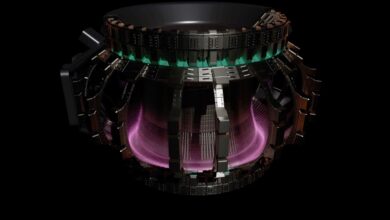
Felici and Buchli’s paths crossed when they were teaching AI to manage an experimental tokamak, a device used for fusion research. Felici was at EPFL in Switzerland, which hosts one such tokamak, while Buchli worked at Google DeepMind. Felici later joined Google DeepMind, where he focused on simulations and machine learning applications for fusion technologies.
Felici believes AI will “be crucial in future control systems,” but he cautions that it’s not fully ready to address this complex task. “I wouldn’t suggest AI should take on the complete management of a fusion reactor,” he stated. At present, AI is more suited to “enhance, optimize, or complement” certain parts of the system.
Currently, Fusionality is concentrating on magnetic confinement fusion, a method that employs strong electromagnets to maintain the density and heat of the fusion fuel suitable for power generation. Examples of startups working on magnetic confinement technologies include Commonwealth Fusion Systems, Realta Fusion, Proxima Fusion, and Type One Energy. Felici mentioned that the company plans to eventually branch out into other fusion methods.
The funding from Fusionality’s pre-seed round will enable the team, which currently consists of seven members, to refine a select range of technologies. Felici compared their development approach to building with Lego blocks. “We begin with a few core blocks and progressively expand,” he explained. “We aim to cover the extensive technology requirements needed to operate a fusion reactor.”