TechCrunch Mobility: Tesla’s Cybercab Launches—But Encounters an Unexpected Hurdle

Welcome back to TechCrunch Mobility, your source for insights into the evolving landscape of transportation and the crucial role that AI plays in it. To receive updates directly to your inbox, sign up for free — just click TechCrunch Mobility!
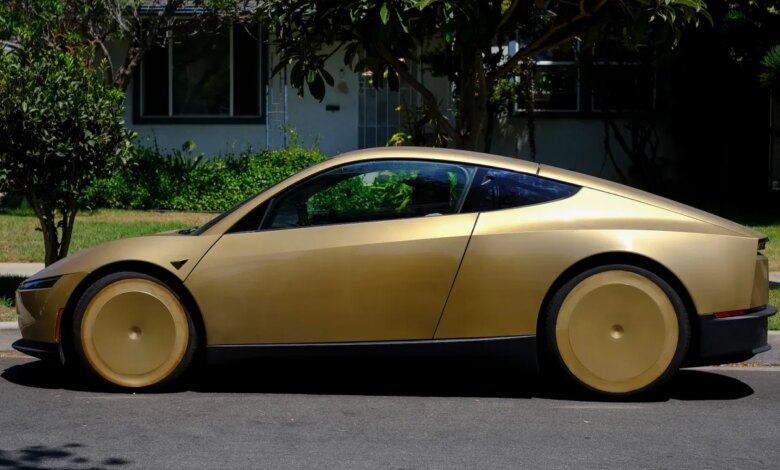
The recent Tesla Cybercab reveal has sparked mixed reactions across social media. Some view the event as evidence that Tesla is leading the charge in autonomous taxi services, while others regard it as an overhyped showcase lacking in substance. Wall Street’s reaction was tepid; the event held in Austin felt unusually subdued, missing the energetic vibe of previous Tesla launches. Notably, CEO Elon Musk was absent, a curious choice given his long-standing claims that Tesla’s trajectory and valuation are closely tied to advancements in robotics and AI.
As senior reporter Sean O’Kane suggested prior to the event, “The Cybercab represents a pivotal moment for Tesla. It’s either the start of a revolution in urban transport or a revelation that, despite its innovations, Tesla remains simply a car manufacturer.”
While the event didn’t inspire much optimism, I tend to see little value in such showcases. The true measure of success lies in Tesla’s ability to launch a functional robotaxi service at scale. Currently, Tesla’s operations appear limited when compared to competitors like Waymo, having registered only 45 Cybercabs in Texas, according to state tracking data.
On a related note, the National Highway Traffic Safety Administration (NHTSA) announced an investigation into Tesla just hours after the initial Cybercabs, which are designed without traditional controls such as a steering wheel or brake pedals, began operating in Austin. Existing federal safety protocols necessitate manual controls, although recent proposals by the Department of Transportation suggest that this may change for fully autonomous vehicles.
Tesla opted to self-certify, a common approach among automakers for conventional vehicles. The NHTSA has responded cautiously but Tesla might proceed with operations while the inquiry unfolds. It’s important to note that regulatory action by the NHTSA is not unprecedented.
Interested in the Cybercab? Tesla has released various guides that clarify key aspects, including that this luxurious robotaxi is not suitable for children. Additionally, the company is looking into selling these autonomous vehicles to fleet operators.
Business Deals
Allianz, the German insurance firm, is reportedly in discussions regarding a potential acquisition of AA, a roadside assistance provider in the U.K., for around £5 billion ($6.77 billion).
Alteon, a startup based in Bengaluru focused on developing autonomous aircraft influenced by dynamic soaring, has successfully raised $2.5 million in a pre-seed funding round from noted investor Lachy Groom and others.
Delivery Hero’s board has endorsed Uber’s $15 billion acquisition bid and suggested that shareholders approve this transaction.
Easy Aerial, a provider of autonomous tethered drone systems for surveillance, has raised $20 million in a Series B funding round with backers including Insight Partners and Entrée Capital.
Magna International is set to invest an additional $35 million in Yuma Energy, a Bengaluru-based company specializing in electric two- and three-wheeler battery-swapping networks.
Newlight, a Bay Area startup creating a hydrogen injection system to enhance cargo ship efficiency, has successfully secured $9 million in seed funding from various investors including lomarlabs and BIRD Energy.
Highlights and Updates

Flock faces increasing criticism over privacy issues associated with its tracking technology, prompting Florida and Texas to cease the use of its license plate readers.
Ken Karklin, the CEO of flying car firm Pivotal, has exited the company. Mike Ross, an aviation executive and board member, has stepped in as interim CEO.
Introducing Liux, a Spanish startup focused on creating microcars with an emphasis on sustainability.
Technology firm May Mobility and NTT Mobility are set to deploy Toyota’s e-Palette autonomous vehicles on public roads in Japan this year, integrating May Mobility’s self-driving technology into the mix.
Uber is planning to lay off around 3,300 employees, which represents approximately 10% of its workforce, as part of a restructuring effort aimed at streamlining management and combining engineering, science, and delivery teams.
Waymo took a proactive stance ahead of Tesla’s Cybercab launch, asserting that fully autonomous vehicles require a combination of sensors, cautioning against relying solely on AI systems for safety. Meanwhile, the company has started offering its robotaxi services to the public in Denver, San Diego, and Tampa.
Zoox has expanded its commercial robotaxi service in Las Vegas, now including transfers to and from Harry Reid International Airport.
Final Note
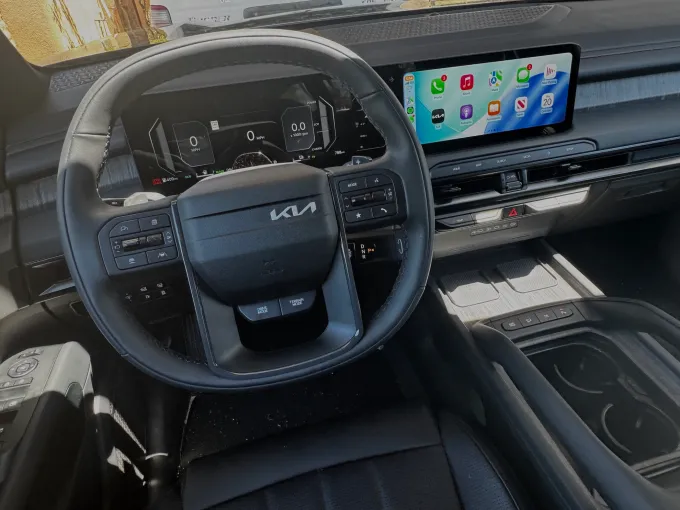
While I usually focus on electric vehicles, I had a recent opportunity to drive the 2027 Kia Telluride hybrid X-Line SX-Prestige trimmed in striking black jade. My fully-equipped model came to a total of $61,180.
This second-generation Kia Telluride features a turbocharged 2.5-liter inline-four hybrid engine, generating 329 horsepower and 339-pound feet of torque. Significantly, it surpasses its non-hybrid counterpart in both power and fuel efficiency, achieving 31 mpg in combined use.
Kia has revamped the design of the new Telluride, giving it a fresh look reminiscent of the Kia EV9, though they feel akin rather than identical. Among my observations: the cabin is more spacious compared to its predecessor, and it operates quietly. Though it isn’t the fastest three-row SUV available and there are concerns regarding the switch from a V6 to a four-cylinder engine, I found it sufficiently responsive for its size.
Lastly, I’ve added an image of the interior as I like to examine user experience and interfaces within infotainment systems. While this layout isn’t my favorite, it does feature some user-friendly design choices like a row of controls positioned conveniently below the touchscreen. However, one feature I struggled with was the gear shifter’s placement as a stalk on the right side of the steering column, which I found challenging to locate consistently.