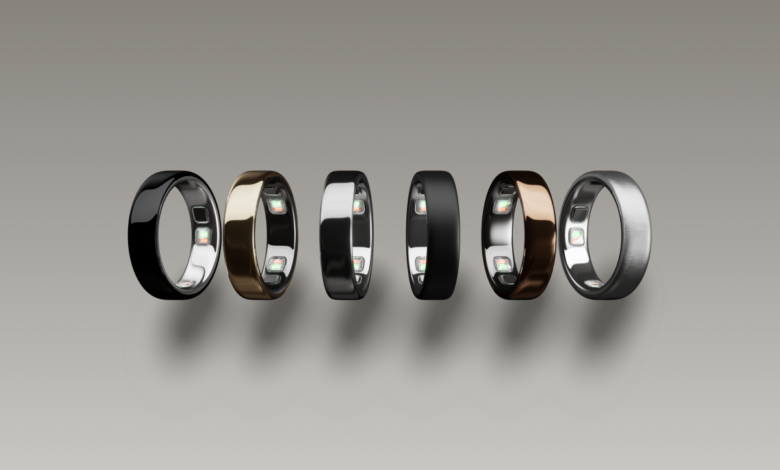
Oura, known for its innovative smart rings, is rumored to be preparing for a U.S. initial public offering (IPO) next month that could raise as much as $3 billion, potentially valuing the company—employing over 900 individuals—at over $16 billion, as reported by Bloomberg. It is anticipated that investors will offer a significant portion of their shares in this stock sale.
If Oura achieves a $16 billion valuation, it would represent a substantial increase from the $10.9 billion valuation set last September, following an $875 million Series E funding round that attracted investments from key players like Fidelity, ICONIQ, Whale Rock, and Atreides, amongst others. Existing support also comes from firms such as Dexcom, The Chernin Group, Forerunner Ventures, Coatue, and Temasek.
The market for wearable technology has become increasingly competitive.
Two years ago, Samsung introduced its own smart ring, the Galaxy Ring. However, Oura’s closest competitor may be Whoop, a brand that has recently revamped itself. Originally designed as a tool for elite athletes and younger men, Whoop has broadened its target audience over the past year by incorporating features like hormone tracking and blood testing focused on perimenopause and thyroid health. This shift helped elevate its valuation to $10 billion in March, while Oura has simultaneously transitioned from its initial focus on biohacking business leaders to a more mainstream brand centered on sleep and recovery.
In May, Oura confirmed it had filed for an IPO in a confidential manner.
The company projected revenues of $500 million for 2024, approximately $1 billion for 2025, and anticipated nearly $2 billion for 2026, with further details promised in its upcoming S-1 filing.
However, not all recent developments for Oura have been favorable. Last week, a class action lawsuit was filed in San Francisco, accusing the company of misleading customers regarding the accuracy of its sleep tracking features. Among various grievances, the lawsuit claims that Oura asserts its ability to determine not only heartbeat and temperature but also the specific sleep stage of the wearer—something that typically requires clinical tools like electroencephalography and specialized sensors not available in consumer technology.
In response to these allegations, a spokesperson for Oura stated over the weekend that the company intends to mount a legal defense against the claims. They clarified that while the Oura Ring is not designed as a medical device or a replacement for clinical sleep studies, its sleep staging capabilities have been validated in numerous studies against polysomnography, which is considered the gold standard. The spokesperson also noted that various independent studies back their accuracy claims and that the company has been open about the methodologies involved in their sleep staging processes.