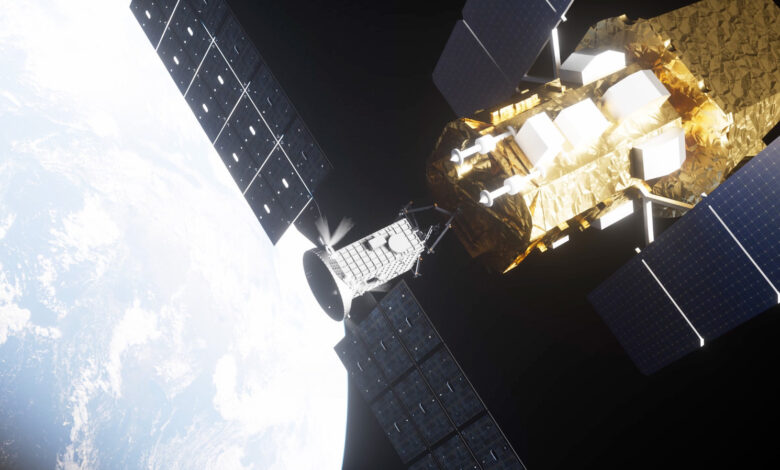
The LINK spacecraft from Katalyst will still meet with the telescope, but it will no longer attempt to elevate its orbit.
The Neil Gehrels Swift Observatory is anticipated to re-enter the Earth’s atmosphere and disintegrate later this year, as NASA has canceled its mission to elevate its orbit. The agency confirmed that Katalyst Space’s LINK spacecraft will no longer dock and boost the satellite’s altitude due to ongoing attitude control issues that emerged in late July.
Previously, NASA reported difficulties in maintaining LINK’s orientation in orbit, leading to erratic spinning and inconsistent communications. Furthermore, some capabilities of LINK’s thruster system were impaired. Although both NASA and Katalyst remained hopeful about resolving the issues just last month, circumstances have evidently shifted since then.
Katalyst was tasked with designing a spacecraft for the Swift Boost mission within less than a year, with the project launching in early July. Shawn Domagal-Goldman, director of NASA’s Astrophysics Division, characterized the initiative as “high-risk, high-reward” from the outset. This unprecedented endeavor was aimed at rescuing the rapidly decaying Swift telescope, which is affected by increasing solar activity.
Launched in 2004 to investigate gamma-ray bursts, NASA’s SWIFT observatory has since been utilized for various other astronomical purposes. It has proved invaluable for swiftly obtaining critical data following unexpected cosmic events. The mission was designed to extend the observatory’s lifespan by about a decade. Moving forward, NASA intends to seek new methods for responding promptly to cosmic occurrences, using existing missions to bridge any gaps in capabilities.
While LINK will not boost the Swift observatory’s orbit, it will still aim to rendezvous with it. NASA and Katalyst plan to collect as much information as possible from this interaction to inform future satellite servicing missions.
“Although this is not the outcome we were striving for, it doesn’t diminish the value of this mission,” stated NASA Administrator Jared Isaacman. “The team worked with remarkable speed to provide Swift a chance to conduct further scientific exploration while enhancing our capabilities for future satellite servicing. We will learn all we can from LINK’s rendezvous attempt and apply those insights to upcoming missions.”