Avoid Overspending on Extra Storage: Affordable and Secure Alternatives to Future-Proof Your Device

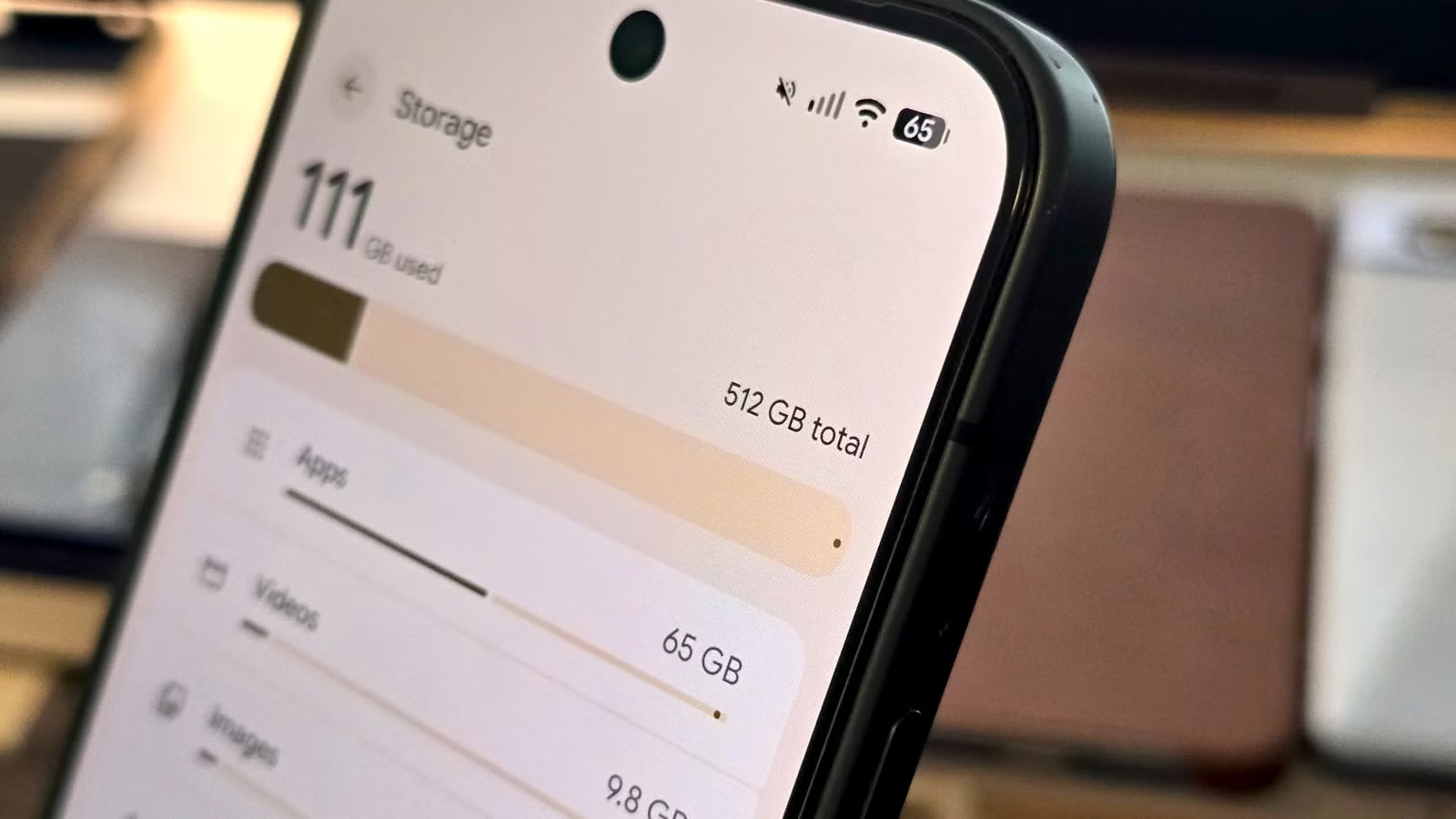
With increasing prices, consumers are relying on their smartphones longer than ever. As a result, ensuring that devices are future-proof has become crucial, which often leads to the choice of higher storage capacities. However, spending more for additional gigabytes can sometimes lead to unforeseen complications.
The trend of smartphones offering only 128GB of internal storage is fading, but this resurgence of storage options coincides with overall price hikes. Initially, it may appear wise to invest in extra storage to postpone frequent upgrades, which seems like a long-term cost-saving strategy.
However, there are several factors to consider before making that choice.
Let’s Analyze the Cost Changes
While it’s a well-known fact that prices are on the rise, it’s important to take a closer look at how this has specifically affected smartphone storage. Let’s compare notable Android models from 2026 to those from 2024.
The Pixel 8 Pro was launched in 2024, featuring storage options of 128GB, 256GB, 512GB, and 1TB, starting at $1,000. The upgrade costs were relatively modest, with an extra $60 for the 256GB variant, another $60 for the 512GB, and $100 for the 1TB version, amounting to a total of $1,220.
Fast-forward to 2026, and the upcoming Pixel 11 Pro is projected to see an increase of $100, starting at 256GB instead of the initial 128GB. This positions it just $40 above the Pixel 8 Pro’s 256GB model. However, the price hike from 256GB to 512GB is rumored to be a staggering $120, with an additional $230 to reach 1TB—totaling $1,450.
A similar trajectory is noted with Samsung models. The Galaxy S24 debuted in 2024 with a base price of $800 for 128GB, adding $60 for the 256GB option—without a 512GB variant. In contrast, the Galaxy S26, set for release this year, starts at $900 for 256GB and $1,020 for 512GB, reflecting a substantial increase in storage upgrade costs.
Is Carrying So Much Personal Data a Good Idea?
Concerns Beyond Price
While price is a significant factor when considering a new phone, especially with higher storage options becoming more costly, it’s essential to factor in other concerns. Spending $1,450 for a Pixel 11 Pro equipped with 1TB of storage is a considerable investment for a smartphone.
Moreover, individuals who choose devices with increased storage often do so at the expense of utilizing cloud services, thereby retaining years’ worth of personal content on their devices. This essentially means carrying portable hard drives in our pockets. Should anything happen to the phone, critical personal data, photos, and videos could become irretrievable. Avoiding cloud solutions out of privacy concerns may seem prudent, but it can lead to a lack of backups if disaster strikes. Relying solely on a smartphone for storage is not a sound strategy.
View Your Phone as Temporary Storage
Cloud Storage Isn’t the Only Option
That said, this doesn’t imply advocating for cloud storage. There are valid reasons for many to prefer local storage—after all, this is how numerous individuals back up their computers, and the same philosophy can apply to mobile devices. Instead of investing in a phone with higher storage, consider allocating those funds towards a USB-C flash drive or even a portable SSD. Make it routine to transfer content from your phone to the external storage device, effectively mitigating the issues discussed earlier.
Purchasing a USB-C flash drive is substantially more affordable than upgrading to a higher phone storage option. For instance, while Samsung charges $120 for an additional 128GB in their base model, a 128GB USB-C drive can typically be found for under $30. If finances allow, investing $120 in a 500GB SSD and a portable USB-C enclosure would be a far better use of those funds.
The benefit of such external storage solutions is not just monetary; they also promote safe backup practices. You can securely maintain your personal content elsewhere, ensuring accessibility across multiple devices. Allocating money towards a portable SSD proves more advantageous than spending the same amount on a “better” phone, while even a budget-friendly USB-C flash drive serves its purpose well.
Although it appears beneficial to invest in a device for the long haul, remember that smartphones accompany us everywhere we go, containing vital stored information. Establishing a reliable backup plan is essential to safeguard against unforeseen loss.