Satya Nadella Warns: Relying on a Single AI for All Needs Could Spell Trouble for Companies

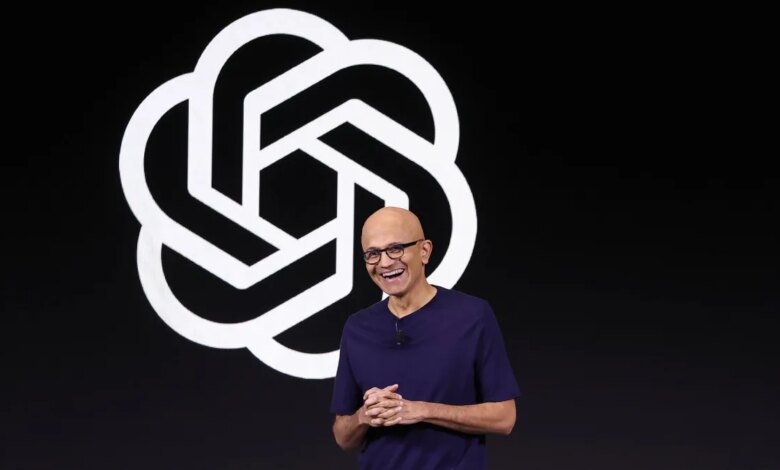
On Sunday, Microsoft CEO Satya Nadella reiterated his earlier warning aimed at businesses utilizing AI, stressing that firms that wholly depend on proprietary AI solutions may not survive in the long run.
Speaking on CNN’s “Fareed Zakaria GPS,” Nadella explained the risks of sharing extensive information with AI model providers. He emphasized the importance of being cautious about what companies disclose, including data and prompts.
Nadella advocated for a system where businesses retain all metadata related to their AI interactions, which would allow them to develop their own models. He stated, “Every time you use the model, all the metadata around it is retained by you, allowing you to train perhaps your own weights or open model.” (Weights refer to the parameters learned by a model, likened to its cognitive abilities.) His core message was that firms should maintain control over their data to build and enhance their own AI models.
He warned, “Any company that lacks this control, I would argue, will not remain viable because you’ve effectively outsourced your decision-making.”
In summary, Nadella believes that companies without their own AI models, or without an intermediary AI infrastructure to segregate their prompts from the model, face significant challenges.
He specifically urged businesses to avoid over-reliance on built-in coding tools provided by AI labs, like Anthropic’s Claude Code and OpenAI’s ChatGPT Codex.
“By keeping the coding tools distinct from the model, you can effectively leverage multiple models for their strengths. This way, if any single model were to disappear, you would still be in control of your direction,” Nadella explained.
It is worth noting that Microsoft is a backer of major AI labs such as Anthropic and OpenAI. These coding tools are notably lucrative for creators, who are seeing substantial financial gains from enterprise usage.
Nonetheless, Nadella’s caution encourages companies to seek alternatives, which aligns with Microsoft’s cloud services approach, promoting the infrastructure he recommends.
Although some may see his warning as a self-serving tactic, he raises a valid point. Businesses are increasingly recognizing the need for diverse AI model options, especially more affordable ones. As a result, they are turning towards open-weight models that allow for tuning on private hardware, necessitating strategies to manage multiple models and coding agents independently.
Nadella’s insights extend beyond budget considerations. He warns that companies that delegate their critical thinking processes to these models risk AI labs creating competitive offerings, a concern heightened as firms incorporate AI agents into their operations.
This issue has been a long-standing concern within the startup ecosystem—how can startups protect themselves from model providers that might imitate and compete with them?
A related incident occurred in May when OpenAI’s CEO Sam Altman proposed investing in Y Combinator startups by providing AI credits. Seed investor Jason Calacanis issued a cautionary note, highlighting the risk of OpenAI potentially replicating and integrating startup concepts into their offerings.
Nadella is now vocalizing these concerns to larger enterprises.
It’s important to note, however, that Nadella’s fears about excessive data sharing primarily concern businesses, not individual users. When asked about consumer protections, he suggested that sharing data is part of the trade-off for utilizing free services, which aligns with the traditional advertising model.
“There has to be some value exchange in the consumer space, where getting something at no cost may involve providing your data. That’s how the advertising industry has functioned,” Nadella remarked.