Dario Amodei of Anthropic Shares Concerns on Chinese AI, Clarifies Stance on Open-Weight Models

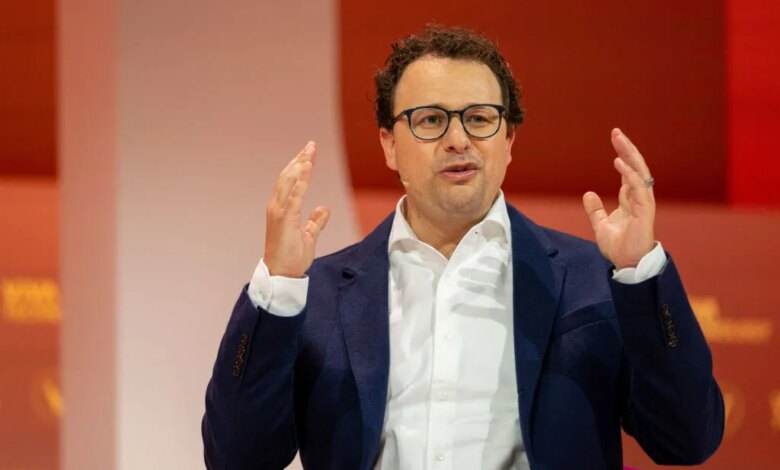
Dario Amodei, the founder and CEO of Anthropic, addressed recent discussions within the tech industry regarding his company’s stance on proposed U.S. government bans on open-weight models from China and potentially other regions.
In a clear statement, Amodei asserted, “Anyone familiar with my previous writings knows that I do not believe such bans are effective. To eliminate any ambiguity: Anthropic has not supported a prohibition on open-weight models,” he emphasized in a blog post.
His clarification followed Nvidia CEO Jensen Huang’s post on X, where he shared an open letter co-signed by Nvidia and other prominent AI firms like Hugging Face, Meta, and Microsoft. The letter urged legislators to refrain from imposing broad “premature restrictions” on open-weight AI models.
Although the letter did not specifically mention China, the ongoing debate emphasizes concerns that Chinese AI laboratories are rapidly advancing, sometimes by appropriating intellectual property from American entities. A common technique for this is distillation, where one AI model learns from another by generating prompts.
In his blog post, Amodei explained that he views open-weight models distinctly from the threats presented by China. He believes that “Open-weight models without harmful capabilities serve the public good: they require only computational resources and offer value to businesses, developers, and researchers.”
While Amodei acknowledges persistent anxieties surrounding AI, he does not consider businesses utilizing open-weight models, including those from China, to be a primary concern. His greater fear is that authoritarian governments might develop superior models to maintain military dominance or to suppress their populations. Though he pointed out that the Chinese Communist Party (CCP) is his main concern, he recognizes other authoritarian regimes also pose risks.
Moreover, Amodei expressed concerns about potential “biological attacks” facilitated by AI, beyond just cybersecurity threats. He noted that open-weight models can be particularly perilous in such scenarios because it is challenging to ensure their safe usage or oversight. He referenced a report by the UK AI Security Institute highlighting that once open-weight models are released, they cannot be retracted.
This perspective stands in contrast to the arguments of open-source supporters, who claim that widespread access to powerful, decentralized models can bolster defense capabilities.
Amodei proposed several measures to counteract Chinese advancements, including limiting their access to high-performance chips—a longstanding policy in the U.S.—and advocating for stricter regulations on distillation. The U.S. has also warned of potential sanctions against China in cases of intellectual property theft involving American models.
Interestingly, Amodei expressed his support for initiatives aimed at establishing a model safety testing organization, particularly if there is global cooperation, including participation from China.
“I believe there is a growing consensus on this idea: I have been encouraged by steps taken by the Trump administration in recent months, as well as industry proposals that would encompass the most advanced models, regardless of their origin, while sparing less capable ones from startups and academia,” Amodei noted.
“To be truly effective,” he added, “this testing would need to be global, requiring buy-in even from the CCP. I think it’s feasible … there might be limited cooperation on preventing biological threats from AI as that could align with China’s interests too.”