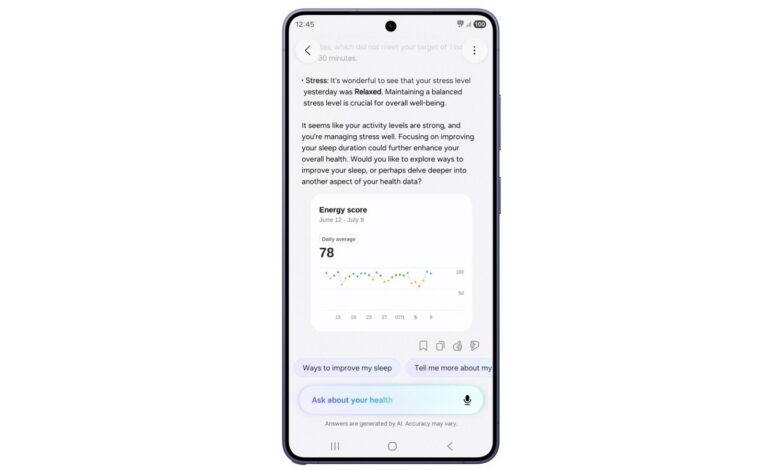
Samsung is venturing into the realm of AI-driven personal health assistants. As the company prepares to unveil its latest devices, including anticipated smartwatches, it has introduced a new feature called Health Assistant, now in beta for select users in the U.S. This tool is integrated into the Samsung Health app.
The primary goal of Health Assistant is to enhance users’ comprehension of their health data. It aims to offer personalized advice on lifestyle modifications that could lead to improved well-being. Samsung asserts that this assistant can deliver reliable recommendations, formulated by healthcare professionals, to help individuals effectively monitor their health.
Health Assistant can access data from your smartphone, smart ring, and Galaxy Watch. This optional service taps into Samsung Health’s five essential health pillars—sleep, activity, nutrition, mindfulness, and vital signs. It further explains how these elements interact with one another.
While Health Assistant is designed to uncover trends and patterns that users might overlook, it does not provide medical advice, prescribe treatments, or diagnose any health issues.
What distinguishes Health Assistant from similar offerings from brands like Whoop and Fitbit is its integration within the Samsung ecosystem. This feature allows it to gather data from various sources, including your calendar and smart home devices. For instance, if you disable your smart lights late at night, the assistant might alert you to potential effects on your sleep quality. In the future, it could suggest relaxation techniques before a business meeting.
Moreover, Samsung has announced additional health features, such as tracking vital signs—like heart rate and oxygen saturation—while you sleep and alerting users to any significant changes. This capability is akin to features available on the Apple Watch. Users will also be able to view metrics like Energy Score, Heart Health Score, and Fitness Index, which evaluate various factors, including activity levels and oxygen consumption, to provide insights into their progress.
Additionally, Samsung is developing a system that would allow healthcare providers to access smartwatch data, enabling them to monitor metrics such as blood pressure between patient visits. This initiative follows Samsung’s acquisition of Xealth, a firm focused on merging data from wearable devices with clinical records.