Welcome back to TechCrunch Mobility, your source for insights into the future of transportation, with a particular focus on the role of AI. Sign up for free updates delivered straight to your inbox — just click TechCrunch Mobility!
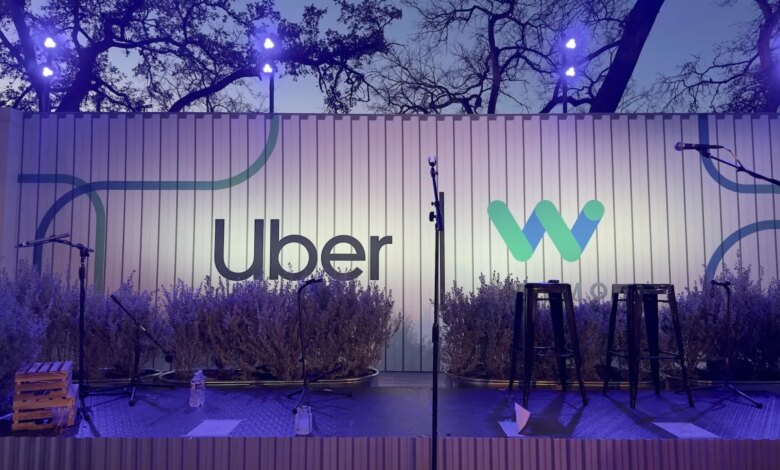
Recently, I discussed the deteriorating partnership between Uber and Waymo. I anticipated that the two organizations would diverge on autonomous vehicle regulations, and this was not mere speculation.
Over the past few weeks, I’ve been engaging with various sources and reviewing Uber’s communications with the D.C. Council, which is currently assessing a bill that could enable the use of autonomous vehicles in Washington, D.C.
My findings revealed that Uber and Waymo are already positioned on opposing sides of this bill, clashing both in private discussions and public forums. Uber has put forth a compelling argument in its attempts to influence the upcoming regulations for autonomous vehicles.
Uber opposes the D.C. legislation, claiming it would eliminate jobs for human drivers and essentially grant Waymo a monopoly. Instead, Uber is advocating for a model where robotaxis would need to operate in conjunction with human drivers on a ride-hailing platform.
Sources indicate that the “hybrid” model proposed by Uber is unlikely to be enacted. However, if it were to become law, it would leave companies like Waymo with two less-than-ideal options: either integrate their robotaxis into ride-hailing services like Uber or hire human drivers alongside their advanced robotaxi fleets, which have required significant investment and time to develop.
A hearing held by the D.C. Council recently featured representatives from Lyft, Tesla, Uber, and Waymo, along with numerous advocates for disability rights and accessibility, local businesses, safety organizations, government officials, labor unions, and think tanks.
From the public statements and subsequent communications I received, it appears that Waymo is among the few companies that generally supports the bill, while much of the industry expresses concern.
Tesla’s senior policy advisor, India Herdman, voiced concerns echoed by other self-driving vehicle developers, specifically regarding the 180-day, 250,000-mile mandatory testing stipulation; the $1 million application fee; the $5 million permit fee; and the $0.15-per-mile tax. Tesla and other firms have also argued that testing mileage from other regions should count towards meeting the established thresholds.
Waymo has already been conducting tests of its self-driving vehicles with human safety operators in Washington, D.C., exceeding the bill’s requirements for both time and mileage. If the bill were to pass as is, Waymo would have a significant head start in the market.
Recent Developments
Uber continues to secure its position as a leader in ride-hailing and delivery services with a $14.8 billion agreement to acquire Germany’s Delivery Hero.
Once the acquisition is finalized—albeit contingent on navigating regulatory challenges—Uber will expand its reach to nearly 100 markets in Europe, the Middle East, Latin America, and Asia, effectively doubling its delivery capacity.
Additionally, Delivery Hero has reached a separate agreement to divest its operations in 14 markets where Uber Eats is already present to New York’s SSW Partners for $1.6 billion.
Other noteworthy investments include …
Self Inspection, a startup based in San Diego focused on revolutionizing vehicle inspections, raised $10 million in a funding round led by Sheryl Sandberg’s family office. Other contributors included tire distributor U.S. AutoForce and automotive lender Westlake Financial, alongside early-stage investors like Costanoa Ventures, Rebellion Ventures, and BrightCap Ventures.
Senra, a company innovating in the production of wire harnesses, secured $65 million in a Series B funding round co-led by Lowercarbon and Interlagos, with participation from firms like General Catalyst, Sequoia Capital, Andreessen Horowitz, and Founders Fund.
Zepto, the Indian rapid delivery firm, is reportedly aiming for a valuation below its peak of $7 billion in its upcoming IPO, according to unnamed sources.
Interesting Tidbits

Chip Motors, based in Miami, unveiled a low-speed electric vehicle aimed at families and short errands, featuring some automation capabilities.
The Los Angeles Police Department is reportedly terminating its partnership with Flock Safety, a surveillance firm that assists in tracking vehicles via a network of license plate cameras nationwide.
Lucid Motors is firmly denying rumors that it may file for Chapter 11 bankruptcy following a report that caused its stock to drop over 50% in a single day—the steepest drop in its history. The company’s communications team, its CEO, and a filing with the U.S. Securities and Exchange Commission have all confirmed that the rumors are unfounded. The stock has since bounced back, trading over 28% higher than before the drastic decline.
Lyft CEO David Risher claims that it represents the “Good Uber,” in a recent interview.
Standard transmission vehicles are becoming increasingly rare, with preliminary data suggesting that just 0.6% of new vehicles in the U.S. for 2025 will feature manual gear shifts, according to reports, raising curiosity about the future for such cars.
According to the National Transportation Safety Board, a Tesla driver involved in a crash into a house back in June had fully pressed the accelerator, overriding the vehicle’s Full Self-Driving system.
San Francisco Mayor Daniel Lurie is advocating for stricter regulations on autonomous vehicles following incidents where Waymo robotaxis stalled in heavy July 4th traffic, resulting in street blockages. In correspondence detailing his concerns, Lurie proposed four primary requirements for ensuring that robotaxi companies can “perform reliably” during extraordinary circumstances.
SpaceX unexpectedly halted its second launch attempt for the upgraded Starship rocket system shortly after the booster ignited at its South Texas facility.
Zoox initiated a software recall after one of its robotaxis encountered confusion caused by smoke from a fire emergency in June.
One Last Note
Uber chief product officer Sachin Kansal recently discussed travel, AI agents, and the competitive landscape in the robotaxi sector in an episode of the Strictly VC podcast. For those who prefer written content, a Q&A version of the interview is available.
Purchases made through links in our articles may earn us a small commission, without affecting our editorial freedom.