In the ongoing discussions about the implications of artificial intelligence, one major concern has emerged among tech advocates in Silicon Valley: a fear that major AI firms could be positioning themselves as competitors by gathering sensitive business data from the companies using their models.
The issue arises as startups and businesses turn to proprietary AI models from well-known labs, such as OpenAI and Anthropic. This arrangement allows these organizations to access confidential information, potentially putting them in direct competition with their clients. Key figures voicing this concern include venture capitalist Jason Calacanis and Palantir’s CEO Alex Karp.
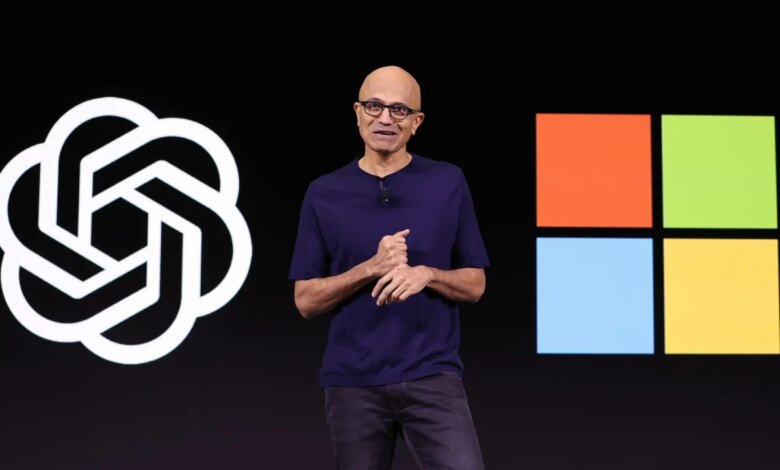
Recently, Microsoft’s CEO, Satya Nadella, added his voice to the chorus of caution. He stated in a new blog post that buyers of AI technology are paying a steep price, not just in finances but also by relinquishing critical proprietary information.
“In essence, you are paying twice for intelligence: once in terms of money and again by sharing your invaluable proprietary insights to optimize the model’s utility,” he notes.
Nadella highlighted the danger of organizations inadvertently educating AI models about the intricacies of their operations.
“These models learn from the ‘exhaust’ — the prompts people provide and corrections made when inaccuracies arise. Each correction becomes a piece of valuable institutional insight,” he argues.
This represents a kind of knowledge that competitors typically cannot acquire, yet businesses are willingly sharing it.
Nadella contended that if AI companies are permitted to openly use internet data for training, it should be acceptable for enterprises to analyze and build upon those AI models. His concept of “distillation” involves utilizing a model’s outputs to understand its workings and create a newer, often more cost-effective model. This echoes allegations made by Anthropic against certain Chinese open-source models concerning data usage to enhance their own systems.
The Microsoft CEO emphasized the inconsistency of allowing model developers to train freely on public data while simultaneously imposing restrictions on others attempting to learn from these models.
“While it’s necessary for model providers to have fair use rights for training on public data, it seems contradictory that they would enforce strict limitations on distillation practices,” Nadella stated.
He expressed particular concern regarding model creators who “reserve the right to learn from how customers utilize their models.”
To address this, Nadella suggested that companies maintain ownership of their data, including prompts and feedback. He advised them to develop their own “proprietary learning environments” possibly utilizing cloud technology, hinting at Microsoft’s Azure platform. Moreover, he advocated for the creation of “orchestration layers” that facilitate easy switching between various AI models, preventing provider lock-in. These AI “gateways” have gained traction among developers.
Though he refrains from mentioning “open source” explicitly, the implication is clear. Additionally, many large enterprises are already transitioning towards open-source solutions hosted on their own systems. Idit Levine, CEO of Solo.io, observes a notable trend as her clients shift from proprietary models to questions about running open-source alternatives on-premises, suggesting substantial cost savings and greater control.
Solo.io’s technology has been recognized for its role in supporting projects under the Linux Foundation. Levine reports that her clientele, which includes notable companies like T-Mobile and SAP, is increasingly adopting on-premise open-source AI solutions, forecasting this as a significant trend within enterprise AI.
Similar motions are happening in related companies such as Vercel and OpenRouter, who have noted rising interest in open-source models. In fact, last month, open models represented 29% of the traffic managed through Vercel’s gateway.
With figures like Microsoft’s CEO encouraging cautious use of proprietary models, it seems likely that this movement will continue to gain momentum. “As you consume intelligence, you simultaneously generate intelligence that deserves to belong to you,” Nadella concluded.