No-Camera Smart Glasses? Even Realities Believes Productivity Trumps Constant Surveillance

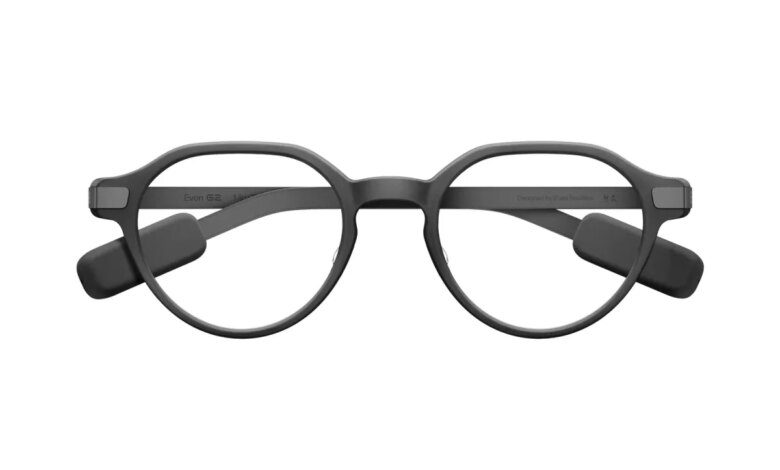
In recent years, numerous technology leaders have suggested that smart glasses could become the next major platform for consumer electronics. However, today’s offerings still heavily rely on smartphones, despite impressive hardware. Even Realities’ G2 smart glasses, for instance, present a polished appearance with a vibrant heads-up display perceptible in various lighting conditions, but their performance is largely dictated by the connection to a mobile device, which can often be inconsistent.
Even Realities adopts a distinctive strategy compared to competitors like Meta. Their smart glasses feature a monochrome heads-up display that presents information and text in a bright green hue, reminiscent of a neon sign.
Designed with privacy in mind, these glasses do not include cameras or speakers, allowing users to prioritize productivity without the concern of recording their surroundings.
The G2 model marks the second iteration of Even Realities’ smart glasses, showcasing enhancements over the earlier G1 model. Key improvements include a brighter display at 1,200 nits (up from 1,000), an increase from two to four microphones, and a 75% larger display area. The new model also features a refresh rate of 60Hz, a significant upgrade from the 20Hz of its predecessor.
During my experience with the G2 over the past few months, I noted significant improvements in its connectivity with smartphones. Initially, frequent disconnections from the app nearly led me to abandon the device, but subsequent app updates have alleviated this issue.
These glasses are particularly aimed at professionals engaged in meetings, presentations, and international travel.
Design
The G2 glasses, available in two frame styles, are exceptionally lightweight at 35 grams. Constructed from magnesium alloy for the frame and titanium alloy for the temples, they are comfortable to wear. However, as I primarily work from home, I found limited use in wearing them throughout the day. Still, the lenses feature UV protection, making them suitable for outdoor use even without the smart capabilities.
According to the company, the G2’s battery can sustain typical use for up to two days on a single charge. The glasses come in a sturdy case that allows for recharging up to seven times before needing its own recharge. While I did not test the full two-day battery life, the glasses held a charge well enough for me to return them to the case without running out of power.
The case, however, is quite large and not easily portable, although it securely holds the glasses.
Features and Functionality
These glasses are designed to assist with schedules, reminders, and note-taking. They can be activated through touch controls on the temples; a double-tap brings up a dashboard displaying upcoming appointments, stock information, and headlines.
While the G2 can display real-time notifications from your phone, the reliability of these alerts can vary. Given that my phone is usually within reach, I found limited utility in this feature.
A long press on the temple controls opens a variety of features: notifications, Translate, Conversate, Teleprompt, to-do lists, and Navigation. The Translate function allows you to set a target language for conversations. During a recent exhibition, I used the glasses while interacting with representatives speaking Chinese, and the translation was effective. I also tested it with journalists communicating in French and Spanish. One drawback is that the other person remains unaware of what you’re saying unless they’re utilizing the app.
The Navigation feature provides turn-by-turn directions, but note that it doesn’t integrate with Google or Apple Maps. Routes must be set up through the Even Realities app. I tried it while walking to nearby cafes, and while the directions were displayed clearly, the app often misidentified addresses, which limits its reliability for unknown locations. However, it could be beneficial for cyclists or motorbike users if the accuracy is improved.
Initially, the Conversate feature simply displayed a live transcript of discussions, which felt redundant since traditional meeting recording options exist. The company later introduced a “prep notes” function that allows users to input notes or documents prior to a meeting, enabling the AI to reference them in real-time or provide brief definitions for concepts as they arise. For instance, while discussing energy topics, a bubble for “Green Hydrogen” appeared, which when tapped, displayed a definition. This aspect proved genuinely helpful, though I wouldn’t want such a feature for every conversation.
Central to the experience is the built-in assistant, Even AI. Similar to other voice assistants, it requires a wake word for activation and can be queried for various tasks. Unfortunately, it often misunderstood my requests and tended to provide lengthy responses that could only be viewed in full without interruption.
Despite having four microphones, the Even AI sometimes struggled to activate, particularly outdoors. Background noise may have been a factor, but better noise management is generally expected from modern technology.
While the G2’s display was clear in most settings, I needed to manually adjust brightness through the app in brightly lit areas. An automatic brightness feature would be welcome, or ideally, manual controls integrated into the glasses themselves are necessary.
The R1 Ring Concept
Even also introduced a companion ring, the R1, that is intended to control the glasses via touch instead of the glasses’ built-in touch controls. However, its price and functionality do not seem to justify the investment.
Although the ring performed well, I found it challenging to identify scenarios in which it provided additional value since the touch-sensitive temples of the glasses could already accomplish the same tasks.
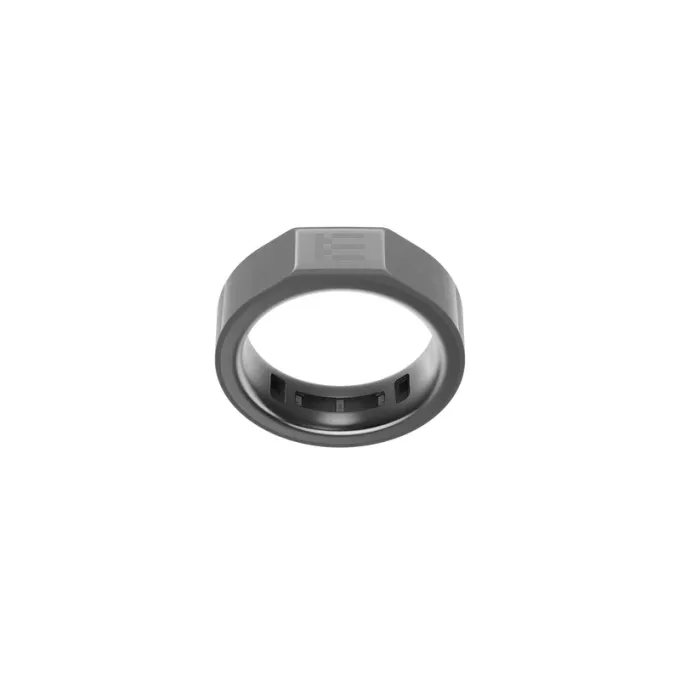
Additionally, the ring includes health tracking features—heart rate, calorie count, steps, sleep monitoring, and blood oxygen levels. For health tracking, I’d prefer a dedicated device like Oura or Ultrahuman instead of a multi-functional ring that also controls glasses. Furthermore, if I am already using a fitness tracker, I wouldn’t want to invest in a ring where health tracking is merely an extra function for a device meant primarily for controlling the glasses.
This functionality leads to a price tag of $249 for the ring, which can be considered steep. If I utilized my smart glasses frequently, I might consider a more affordable controller if it incorporated a microphone for commands to the AI assistant. Ultimately, the R1 ring doesn’t seem worth the investment at this point.
Evaluating the Even G2
With smart glasses emerging rapidly on the market, various models equipped with cameras and devoid of screens, like the Ray-Bans by Meta, are gaining traction. Meanwhile, Meta, Snap, and other brands are competing to introduce color-screened glasses. A limited number of Chinese manufacturers, such as Rokid and Inmo, offer similar neon-display designs.
Priced at $599, the Even G2 provides impressive hardware within a stylish and lightweight frame. The company is also exploring ways to enhance the glasses’ customization options by integrating third-party applications, though I didn’t encounter any compelling apps that encouraged me to use the glasses more frequently. They feel more like a supplementary gadget: enjoyable to explore for tech enthusiasts who enjoy experimenting with new devices and don’t mind testing external applications.
The underlying technology is solid, but aside from specialized tasks centered around translation or teleprompting, identifying a routine daily application for such smart glasses remains challenging.
Even Realities is banking on the absence of cameras and speakers as a smart strategy for a productivity-focused device, a direction I agree with. However, as the company transitions to unicorn status, it should focus on developing more first-party software to ensure the glasses become a regular fixture in users’ daily lives.