American Autonomous Ground Vehicles Make Their Debut on the Frontlines of Ukraine

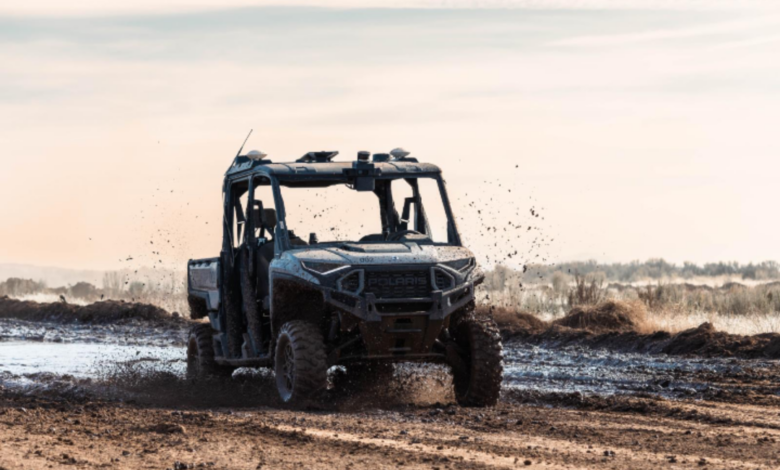
Forterra, an American manufacturer of autonomous vehicles, announced today that over 100 of its self-driving ATVs have been active in conflict zones in Ukraine for nine months. The company claims this marks the largest deployment of autonomous ground vehicles in combat by any US defense technology firm.
“Every defense technology faces real challenges in combat. You can’t truly understand its effectiveness until it’s put to the test,” stated Scott Sanders, Forterra’s chief growth officer and a former Marine officer.
Backed by US defense funding, this initiative is part of a broader mission to modernize the US military and support Ukraine’s resistance against Russian incursions. While drones have gained significant attention, the challenges posed by aerial surveillance have prompted Ukrainian strategists to explore ground-based autonomous solutions.
“There is no safe place to hide,” explained Sergeant Major Corey Wilkens, who oversees a US Army program focused on developing autonomous vehicles. “Soldiers become susceptible to attacks from drones, artillery, and other threats due to the pervasive risks in the area.”
In response, Ukraine has started developing its uncrewed ground vehicles (UGVs) to assist with logistics, evacuation of the wounded, and transport of supplies. However, these vehicles usually run on batteries and have a maximum weight capacity of 250 kilograms, according to an unnamed Ukrainian soldier familiar with the technology.
Forterra’s Lancer vehicles, modified Polaris ATVs featuring a unique sensor and computing system, are powered by gas and can carry up to 750 kilograms, enhancing their utility. “This UGV is essential for logistics and sustaining our defense in Ukraine,” said the soldier. “It’s incredibly effective, and we’re eager to obtain more.”
Initial impressions were not as enthusiastic, as the Ukrainian Armed Forces had mixed experiences with Western technology. Initially, Forterra’s equipment appeared over-engineered for the Ukrainian context. However, incorporating a Starlink satellite antenna into the vehicles significantly improved their usability.
Since arriving in Ukraine last October, these vehicles have covered over 2,500 miles across more than 1,100 missions, transporting a total of 777,440 pounds and executing 52 casualty evacuations. A few units have been lost in the conflict, especially when failing in treacherous terrain where they became easy targets for Russian forces.
Forterra has gained valuable insights regarding electronic warfare, remote software updates, and managing challenging environments. The company has raised over $500 million in venture capital, positioning itself favorably for securing national defense contracts.
They are also coming to terms with the current limitations of autonomy; Ukrainian troops have primarily been controlling the vehicles remotely in combat zones due to the high value of the assets and the technology’s inability to fully adapt to combat environments.
While the vehicles can autonomously navigate a variety of terrains, they are not yet capable of identifying and responding to enemy threats in real-time. “We need machines that can react to enemy activities while in the field, which current autonomous systems cannot do effectively,” the Ukrainian soldier said.
With two decades of experience in autonomic vehicle development, Forterra is working to combine algorithms used in self-driving cars with advanced AI technology to create more responsive machines. However, a major hurdle remains collecting the right data necessary for these advancements.
“There are many challenges that aren’t addressed in open-source models since they don’t mirror human actions, like navigating minefields or controlling weapon systems,” Sanders remarked. “It’s essential to adjust traditional robotics approaches while incorporating AI where applicable.”
Other competitors in the market, like Scout AI, which raised $100 million, are tackling similar challenges while developing UGVs for military applications.
Despite existing limitations, military experts in the US believe investing in ground autonomy is crucial. “We’ve proven that ground autonomy is attainable,” stated Wilkens.
Scott Philips, Forterra’s chief innovation officer, visited a Ukrainian command center to observe the vehicles in action and garnered respect from personnel for being present in a conflict zone.
“What stood out was identifying where manual processes still exist, where data needs to be entered or verified by hand, and where automation has already been implemented,” Philips described. “These insights provide a glimpse that no presentation can offer, showing clearly where enhanced tools could alleviate pressure on the personnel involved.”
The Ukrainian forces also posed a challenge: to make the vehicles more affordable. While Forterra’s Lancers are competitively priced within their category due to the reliance on Polaris’ supply chain, their value still restricts more widespread deployment, unlike UAVs.
“Attrition is a reality in this combat scenario, and we’ve experienced losses. It’s painful, and we need more vehicles, which means we need them to be cheaper,” remarked the Ukrainian soldier.