Treasury Signals Possible Sanctions Following White House Assertion on Moonshot’s Role in Anthropic’s Fable Development

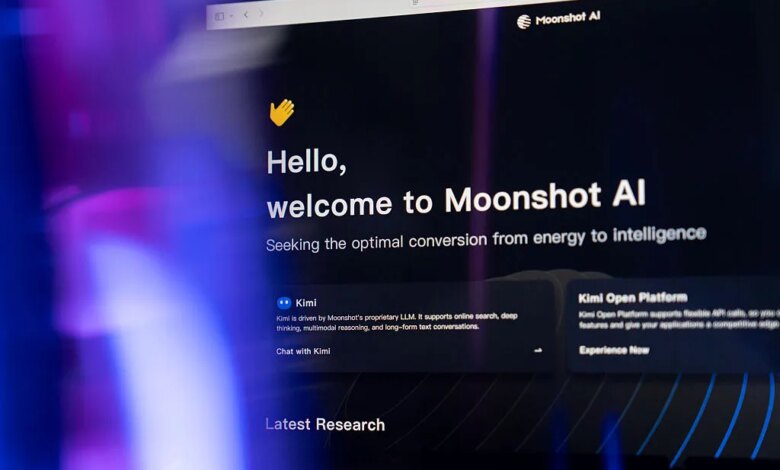
On Wednesday, U.S. Treasury Secretary Scott Bessent reiterated his stern warnings to Chinese AI firms, stating that sanctions could be implemented following allegations that the company Moonshot improperly extracted information from Anthropic’s Fable model.
Model distillation is an AI training method where a smaller model learns from the outputs of a larger model. While this can sometimes breach intellectual property rights, it is generally recognized as a valid optimization approach.
“Open source does not equate to unrestricted access to American intellectual property,” Bessent wrote on social media. “If Chinese companies engage in covert, large-scale distillation practices that constitute IP theft, we will consider sanctions and designations for the Entity List.”
Earlier this week, Bessent mentioned that the U.S. would scrutinize open source models from China for indications of intellectual property violations and would impose penalties if any are discovered.
Bessent’s comments followed accusations from Michael Kratsios, the White House’s science and technology policy lead, who claimed that Moonshot was engaged in extensive distillation efforts against U.S. models. He alleged that the company had procured Nvidia’s GB300 servers and accessed resources in Thailand, likely for training its AI systems, raising concerns about potential violations of U.S. export regulations.
The GB300 servers are part of Nvidia’s Blackwell generation, which is prohibited from being sold to firms in China.
Some analysts challenge the notion that Kimi K3 could have been primarily developed by distilling from Fable, given that Fable has only been accessible since July 1. Moonshot unveiled K3 last week as an open-weight model, and its sophisticated features have sparked doubt regarding the viability of the current business models of top U.S. AI laboratories, questioning their capacity to maintain the significant funding required for the ongoing AI competition.
This incident has also escalated a wider discussion in Washington about the increasing number of Chinese open models. Some, including Dean Ball, a former AI advisor at the White House and current head of Strategic Futures at OpenAI, have suggested that the U.S. should impose restrictions or an outright ban on Chinese open-weight models to protect America’s technological edge and address potential national security issues.
Inquiries have been made to Moonshot and the Treasury for further comments.