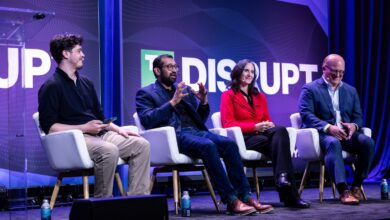
Intuit Abandons AI Agent Framework Twice in Four Months: Insights from AI VP at VB Transform 2026 on the Rapid Evolution


Intuit has been at the forefront of agentic AI, though its journey to success has encountered several challenges.
During the VB Transform 2026 event, Nhung Ho, Intuit’s VP of AI, shared insights into how the company revamped its agent infrastructure twice within around four months. Initially, Intuit transitioned from a system of specialized agents to a central orchestration layer but later decided to scrap that approach in favor of a more versatile skills and tools framework. The second overhaul was completed in just 60 days, with a functional prototype available in less than 20 days.
The need for this second redesign arose from a specific issue. In the orchestrated system, agents communicated results to each other using natural language, leading to a loss of context necessary for the subsequent agent’s accurate action.
“When you have multiple agents communicating with each other, every transfer increases the potential for errors,” Ho explained.
The Breakdown of the Orchestration Layer
Ho noted that the initial move towards specialized agents stemmed from straightforward feedback from customers. Having a set of agents demands management from the customer, who must choose the appropriate agent for a task. Intuit’s aim was to create a system to autonomously assign tasks without requiring customer input.
The orchestration layer functioned adequately for around three months, which Ho humorously described as equivalent to a year in the rapidly evolving landscape of agent technology in 2026.
However, the breakdown occurred due to structural issues rather than limitations in capacity. Relying on natural language to transfer results meant that each agent had to deduce how the previous one arrived at its conclusions, causing degradation of clarity with each additional step. Consequently, a chain of ten agents consistently compounded errors rather than failing sporadically.
This realization prompted Intuit to revert to a skills and tools architecture.
The 60-Day Overhaul and Gaining Engineering Support
Reconstructing a functional agent system in just 60 days required more than merely a strategic decision. Ho indicated that the greater challenge was gaining the approval of both leadership and engineers who had originally developed the retired agents.
The strategy for leadership involved demonstrating tangible outcomes. Ho’s team created a prototype of the new architecture using actual customer inquiries sourced from the production environment, showcasing its superior performance against the previous system.
“The best evidence is understanding what customers aim to achieve. Any system developed must address their needs,” Ho asserted.
To persuade engineering teams presented a different challenge. Hundreds of engineers had contributed to the earlier specialized agents, and the new approach necessitated reconfiguring their work into individual skills and tools.
Ho emphasized that the argument focused on scalability. A standalone agent addressed a singular issue, whereas a shared skill or tool in the new framework could benefit every customer interacting with that aspect of the product. This change also redefined daily responsibilities for partner teams, shifting their emphasis from agent development to conducting evaluations—now the primary means of assessing the new architecture’s efficacy.
Integrating Human Support and Expanding Feedback Mechanisms
One of the most notable features emerging from the redesign is a capability that allows a live conversation with an agent to engage a human support representative—currently in limited trials with about 1% of Intuit’s clientele. “We intend to expand this feature in the coming weeks,” she noted.
Ho explained that a customer can invite an Intuit support representative, their own accountant, or an Intuit bookkeeper into the dialogue, with that individual receiving the complete context of previous interactions with the agent.
She contrasted this with the typical approach many AI chat tools take. Instead of concluding a tax inquiry with a vague suggestion to consult a professional, Intuit’s framework seamlessly connects users to the relevant expert during the conversation.
This integration is complemented by a permissions framework tailored for financial information. Every action an agent undertakes regarding a customer’s financial data requires explicit consent first, although Ho mentioned this requirement might relax as customers develop confidence in the system. Intuit meticulously tracks all agent actions, providing an option for reversibility if necessary.
Evolving Customer Feedback in the Agentic AI Landscape
The rebuild also transformed how Intuit collects and processes feedback, which Ho indicated is a fundamentally different approach than previous methods.
“Historically, feedback was scarce and often polarized,” Ho observed. “Customers either loved it or loathed it, typically leaning towards negative sentiments.”
In a chat-based setup, each conversation serves as a form of feedback, leading to a striking increase in customer input from approximately 0.3% of users providing explicit feedback to nearly 100% engagement.
Ho mentioned that she has resumed coding to develop models for analyzing this influx of feedback systematically, identifying shortcomings in the system that would overwhelm traditional review processes.
This new volume of feedback also brings a candid tone that many product teams may not be accustomed to. Customers provide straightforward assessments of failures, expressing their frustrations directly.
“They openly say, ‘You’re not doing well. I don’t like this. This isn’t right,'” Ho remarked. “However, they are also understanding and willing to offer constructive criticism, placing the responsibility on our shoulders to capitalize on this new and significant type of feedback and enhance the system accordingly.”