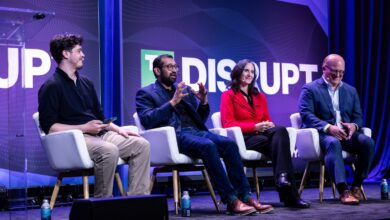
In late May, during a conversation in Athens, Neil Rimer expressed thoughts that have lingered with me. At a dynamic tech festival there, amid discussions of the burgeoning wealth in the AI sector, he mentioned that he strongly believes a form of wealth redistribution is forthcoming. “It could either be voluntary or involuntary, but it will occur, and I hope it’s voluntary,” he remarked, indicating he believes technology leaders could facilitate this process.
Such statements might come off as typical populism from many people; however, hearing them from Rimer, co-founder of Index Ventures—one of the most prominent venture capital firms in the past thirty years—was particularly noteworthy.
Rimer stepped back from active investing in 2021 and now spends a significant amount of his time in Athens, where his wife hails from and where his children value their Greek citizenship. He appeared for our discussion dressed in a casual button-down shirt and jeans, eschewing the typical quarter-zips and upscale knits favored by his peers. Despite this, Index Ventures has enjoyed impressive returns with around $15 billion raised from investors since its inception. Notable exits last year, such as Figma’s IPO and Google’s acquisition of the cybersecurity firm Wiz, reportedly netted the firm approximately $9 billion.
Rimer has also made strides to give back to the community. He serves on the board of Endeavor Greece, which supports entrepreneurs in emerging markets, and chaired the board of Human Rights Watch from 2019 to 2025. In late 2021, he, along with his family, donated $13 million to McGill University to renovate a campus building now known as the Rimer Building, as well as to establish an Institute for Indigenous Research and Knowledges.
His comments on distribution come at a peculiar time for philanthropy. The Giving Pledge, initiated by Warren Buffett and Bill Gates in 2010 to encourage billionaires to commit half their wealth to charitable causes, is losing steam. In its first five years, 113 families signed it; that number dropped to 72, then 43, and dwindled to just four in 2024, reflecting growing disinterest in philanthropy among some of the richest tech figures. Notably, Elon Musk has referred to his ventures as forms of philanthropy in themselves.
Trends indicate that the decline in charitable giving extends beyond the Pledge. American charitable contributions reached an unprecedented $592.5 billion in 2024; nevertheless, the number of Americans donating has decreased for five consecutive years, with a 4.5% drop noted in 2024 alone, as per the Stanford Social Innovation Review. While two-thirds of households donated in 2000, only about half do so now, and even among affluent households, donations have fallen from 90% in 2017 to 81% last year, according to data from Bank of America and Lilly Family School.
Index’s portfolio reflects this trend, including investments in Anthropic. Business Insider recently inquired about how wealthy employees at Anthropic, who are linked to effective altruism, are navigating their newfound riches. Although Anthropic matches up to 25% of employee equity donations to charities, most employees appear more interested in angel investing or launching their own enterprises, rather than committing to philanthropy, according to financial planner Alex Caswell.
The lack of voluntary charitable actions is now prompting legislative efforts. California voters will soon decide on a one-time 5% wealth tax aimed at billionaires. Some, including Google founders Sergey Brin and Larry Page, have relocated to South Florida to avoid potentially unfavorable tax outcomes.
OpenAI is reportedly contemplating an IPO in 2027, with one motivation being that the potential tax, if enacted, would assess net worth based on worldwide assets as of this year’s end.
Naturally, substantial resistance exists against such wealth-redistribution measures, including from Governor Gavin Newsom and various economists, who highlight that many industrialized nations have repealed similar taxes since 1990 due to wealthy residents relocating.
Alternative plans are equally contentious. OpenAI has allegedly discussed granting the federal government a 5% equity stake, with CEO Sam Altman portraying it as a method of sharing the benefits of AI with the public. Critics, however, view it as a way to gain political backing in Washington. Silicon Valley’s history shows resistance to involving the government financially; veteran investor Roelof Botha humorously noted that some of the most alarming words are: “I’m from the government, and I’m here to help.”
The extent of wealth outside these redistribution conversations is staggering. Elon Musk recently crossed the $1 trillion mark in net worth following SpaceX’s IPO. Forbes tallied 45 new AI billionaires in the 2026 rankings, with a combined value of $2.9 trillion, not accounting for the anticipated valuations of Anthropic or OpenAI upon their public listings. Reports indicate that once both companies go public, their employees could collectively possess enough wealth to acquire nearly a third of all homes in the San Francisco metropolitan area.
It seems unprecedented, though whether it represents an extreme historical moment raises questions. Last year, the top 1% of U.S. households held 31.7% of the nation’s wealth—a record since the Federal Reserve began tracking in 1989—roughly equal to the combined wealth of the other 90% of households. While this is below the 45% commanded by the top 1% at the apex of the Gilded Age in 1916, a closer look at the ultra-wealthy tells a different story. Economist Gabriel Zucman points out that, around 1910, the four largest fortunes represented 4% of U.S. GDP; today, a similar group of 19 households accounts for 14% of it.
The two paths Rimer envisions—voluntary or forced redistribution—have historical precedents from previous eras of wealth concentration. In 1889, Andrew Carnegie published “The Gospel of Wealth,” advocating that the wealthy should treat their fortunes as trusts to be invested for the public good during their lifetime. This pamphlet became foundational to modern philanthropy, similar to the principles behind the Giving Pledge.
However, this philanthropic approach did not preclude political solutions from arising. By the mid-1930s, Senator Huey Long garnered support for his “Share Our Wealth” program, which called for substantial taxes on the affluent to provide guaranteed incomes for all Americans. In response to Long’s popularity and the potential loss of working-class backing, Franklin Roosevelt implemented what the media dubbed the “soak-the-rich tax,” raising the top marginal rate to 79%. While this tax fell short of Long’s aspirations, it remains a prominent historical example of enforced redistribution surfacing when voluntary giving failed to meet societal pressures.
Rimer, informed by his technology background, is aware of these dynamics. He finds the “moral core of tech companies” particularly interesting, tracing it back to his time at Stanford in 1984, when Apple offered discounted Macintosh computers to students. In that era, he saw the founders of Apple as visionaries creating genuinely beneficial products.
Rimer expressed his concern that his children now perceive certain tech companies in a negative light, comparable to how previous generations viewed military contractors or tobacco firms.
Although critics may point out that Rimer stands to gain from the wealth he discusses redistributing, he prefers that his peers choose to give back rather than the government taking their assets. He believes there is a simpler route to achieving this outcome and is hopeful that individuals will opt for it before history dictates otherwise.