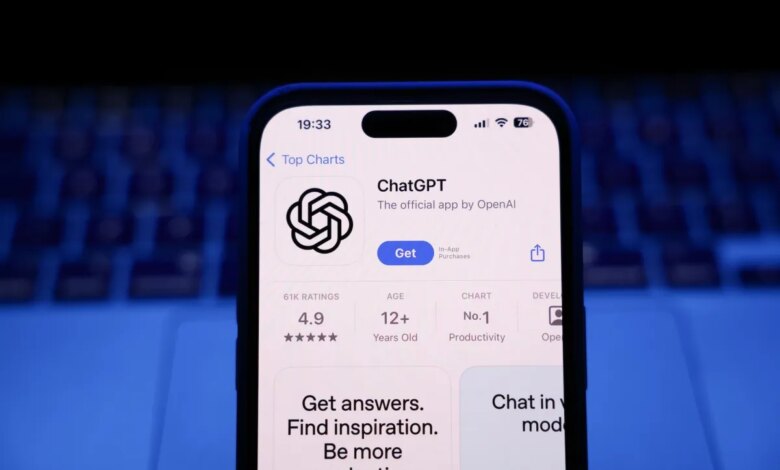
Over three and a half years since the launch of ChatGPT, AI assistants have gained significant popularity, with millions of users globally. However, the competitive scene is rapidly evolving. Although OpenAI’s ChatGPT is still the leading AI assistant, its global market share has fallen below 50% for the first time, as users explore alternatives like Google’s Gemini, Anthropic’s Claude, and xAI’s Grok. This shift is highlighted in Sensor Tower’s State of AI Report for 2026.
ChatGPT’s rise has been remarkable, attaining 1 billion monthly users faster than any other application. As of February, OpenAI reported having 900 million weekly active users. Despite its declining market share, ChatGPT remains at the forefront of AI assistants, boasting over 1.1 billion monthly users, with Gemini and Claude following at 662 million and 245 million, respectively.
Until January, ChatGPT held over a 50% market share, but by May, that figure dropped to 46.4%, attributed to Gemini’s rise to 27.7% and Claude’s 10.3%. Other assistants, such as Grok and Perplexity, account for less than 5% of the market.
According to the same report, users are increasingly switching between different AI assistants. Notably, OpenAI’s partnership with the U.S. Department of Defense in February led to a surge in uninstalls, reflecting users’ concern over brand values and trust. Gemini’s growth is largely attributed to its integration with Google’s extensive toolset, while Claude is gaining traction for its productivity capabilities.
In the first half of 2026, AI app downloads are on track to reach nearly 2.3 billion, with user spending surpassing $4.2 billion, according to estimates. This marks a significant increase from $1.83 billion in the same period of 2025, indicating a shift towards monetization in the industry. However, growth rates for both downloads and spending have slowed, signaling a maturing market.
Regionally, Asia experienced a 3.3% decline in downloads in Q1 2026, attributed to reductions in China and India. Despite leading in overall downloads, Asia trails behind North America and Europe in terms of in-app purchases, a crucial consideration for companies looking to develop premium features.
In the U.S., users are increasingly utilizing AI assistants for productivity, resulting in greater spending on premium features. Average revenue per user has increased industry-wide, with Claude leading the pack—13% of its users are subscribing to paid plans, setting it apart as a business model to watch.
Sensor Tower estimates that the time spent on AI apps will rise from 17.2 billion hours in H1 2025 to approximately 36 billion hours in H1 2026. The top three AI assistants account for 89% of this usage. In contrast, other categories related to AI, such as companions or content generation tools, remain underdeveloped, presenting both challenges and opportunities for the market.
OpenAI began testing ads within ChatGPT in February, gradually increasing ad appearances. By May, around 17% of daily users engaged with ads, marking a pivotal shift in ChatGPT’s monetization strategy beyond subscriptions.
So far, the primary advertisement categories in ChatGPT include software and shopping, followed by media, entertainment, and food services.
As ChatGPT enhances its shopping features, it’s directing referral traffic to retailers like Target and Walmart. In contrast, Amazon, which has restricted ChatGPT’s access, has seen little traffic growth from the assistant.
This gap presents opportunities for competitors. Retailers like Walmart have introduced their own AI assistants to assist shoppers. While Amazon’s Rufus has stagnated, Walmart’s Spark is gaining traction. Insight from Sensor Tower indicates that Amazon shoppers using Rufus tend to spend more time and have higher conversion rates, suggesting that on-platform AI can significantly influence purchasing decisions when users engage with these tools.