Jack Dorsey’s Bitchat Removed from Indian App Stores Following Government Directive

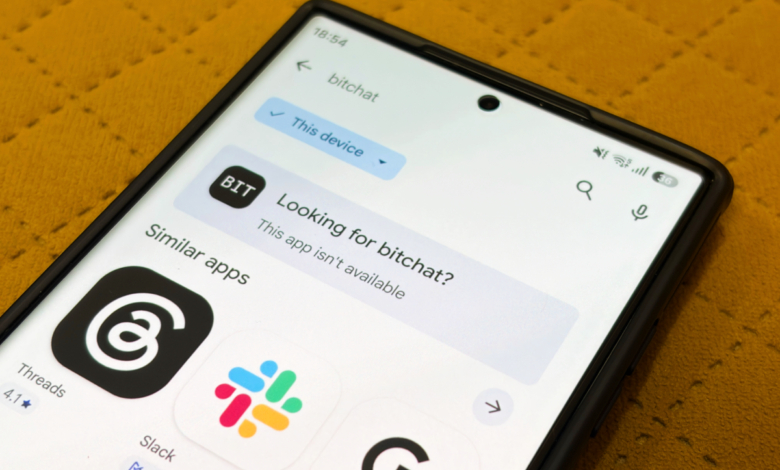
Bitchat, a decentralized messaging application created by Jack Dorsey, is no longer available in the app stores of Apple and Google in India, following the government’s attempt to limit access to the software.
Dorsey announced on Saturday that the Indian government had directed Apple to remove Bitchat from its App Store within the nation. He shared a notification from Apple, which indicated that the Ministry of Electronics and Information Technology in India made the request under Section 69A of the Information Technology Act, the legal framework governing government mandates for online content blocking.
According to Apple’s notice, Bitchat will still be accessible in its App Store outside of India, but availability through the TestFlight beta-testing platform will also be restricted within the country.
A check by TechCrunch revealed that Bitchat was unavailable for download on Google Play in India as well. Additionally, the app’s official website could not be accessed via various internet service providers in the nation. It remains unclear whether Google or service providers received directives from the central government as well.
Requests for comments from Apple, Google, and India’s IT ministry went unanswered.
Launched in July of the previous year, Bitchat utilizes Bluetooth mesh networking to facilitate encrypted messaging between nearby devices without the need for cellular networks, internet connectivity, or centralized servers.
In July 2026, Dorsey disclosed that GitHub was ordered by Indian authorities to remove repositories linked to the open-source messaging app, raising concerns among digital rights defenders regarding the legality of such restrictions based on the software’s functionalities.
The Indian government’s directive to GitHub stated that Bitchat’s structure made it challenging for law enforcement to intercept communications or track users, particularly due to its capacity to function even during internet outages. This earlier order referenced a different provision of India’s IT law concerning intermediaries and their liabilities for third-party content, contrasting with Section 69A cited in Apple’s recent notice.
The Internet Freedom Foundation, a digital rights advocacy organization based in New Delhi, criticized the most recent order as unconstitutional. They contended that while Section 69A permits the government to block illegal information, it does not allow for the banning of a messaging app simply due to its operational capabilities during internet shutdowns. They also pointed out that neither the blocking order nor the purportedly illegal content that justified the action had been disclosed publicly.
These new restrictions on Bitchat come as India faces an upsurge of youth-led protests related to alterations in voter rolls. On Saturday, police detained several demonstrators in New Delhi as they called for the resignation of the chief election commissioner, citing concerns over alleged electoral manipulation. Authorities had also suspended internet services around New Delhi’s Jantar Mantar for 12 hours on Friday amidst the protests.
During earlier protests in July, participants reportedly resorted to using Bitchat and the competing app Briar after internet services were halted.
Interest in Bitchat peaked in India during this period, with the nation accounting for approximately 85% of the app’s global downloads between July 17 and July 23, a significant increase from around 1% in the prior 30 days, according to data from a market intelligence firm.